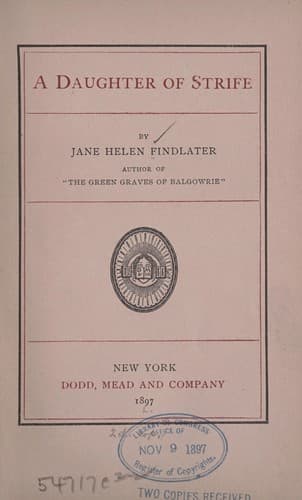
London (England) -- History -- 18th century -- Fiction
Carrie, however, was not so easily answered. She followed Phil’s
retreating figure as it disappeared round the Square, before she spoke
again, then she said, with great decision—
‘There goes my husband that is to be, Patty.’
‘Lor’! have a care what you say in the streets, Miss Carrie!’ cried
Patty, with a delighted giggle.
Thus Phil passed out of Carrie’s life for the time being.
It was not an age of learned women, so though Carrie began her education
about this time, she was not the disquieting receptacle of knowledge
that modern childhood sometimes is in our progressive age. Carrie
learned to read and write, she could do a little arithmetic, and began
to sew a sampler of intricate stitchery; but she could not analyse her
native tongue, or speak in any other, and I fear even her knowledge of
geography was very hazy. Indeed, if the truth must be told about Carrie,
she was entirely unintellectual in every way. Lessons were nothing but a
pain to her, and as in these days a woman was not thought to add to her
charms by wisdom, Carrie was not compelled to pursue her studies after
she had attained to a certain very easy standard.
She was compelled, however, to learn all the housekeeping arts, and Mrs.
Shepley expected nothing short of perfection in this branch of
education. By the time Carrie was thirteen there was a good deal of
friction between the mother and daughter. For Carrie, to her want of
intellectuality, added a supreme carelessness, which was agonising to
her conventional parent. If she had been an incapable girl it would have
been different; but Carrie was far from incapable. When she chose, no
girl of her age could accomplish any household task better. Yet, where
it was a question of pleasure, Carrie would fling aside every duty and
amuse herself without a thought. She had indeed a whole-heartedness of
joy in living, that would have reconciled almost any one except Mrs.
Shepley to her heedless ways. But to her they were unpardonable, and the
worst of it all was, that Carrie’s father encouraged her in her careless
habits—making it almost useless for her to remonstrate.
How it would have fared between the mother and daughter later in life is
hard to say. They were both spared this test. For soon after Carrie’s
fourteenth birthday was past, Mrs. Shepley fell ill of a lingering
disorder, and lay for many a long month between life and death. Carrie
grew less careless in these months of anxiety, grew quieter also, poor
child—never shut the doors noisily, and almost forgot how to whistle,
while Sebastian went about with a very grave face. Now that Emma was so
ill, he recognised what a good wife she had been to him in spite of all
her failings, and realised too what it would mean to him should he be
left with Carrie motherless on his hands. Whatever Emma’s faults had
been, she had been a careful mother, and had given a zealous
watchfulness to everything concerning Carrie that he never could have
time to give.
Public-domain text, read in full here on John Shaqi.
Reviews
Reviews
No reviews yet
Be the first to share your thoughts on this work.
Join the Discussion
Join the discussion
Sign in to leave a comment or review.
Sign InorCreate an account