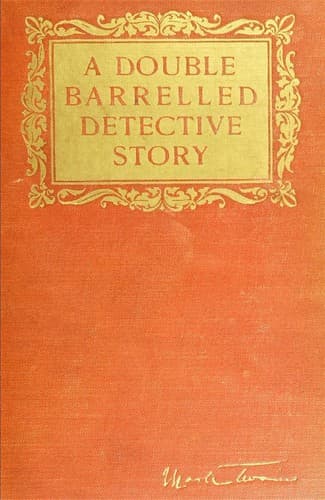
American fiction -- 20th century; Detective and mystery stories
They said he was just gone, on a journey; left no address; didn't say
where he was going; looked frightened when asked to leave his address;
had no baggage but a cheap valise; carried it off on foot--a “stingy old
person, and not much loss to the house.” “Old!” I suppose he is, now. I
hardly heard; I was there but a moment. I rushed along his trail, and
it led me to a wharf. Mother, the smoke of the steamer he had taken was
just fading out on the horizon! I should have saved half an hour if I
had gone in the right direction at first. I could have taken a fast tug,
and should have stood a chance of catching that vessel. She is bound for
Melbourne.
HOPE CANYON, CALIFORNIA, October 3, 1900.
You have a right to complain. “A letter a year” is a paucity; I freely
acknowledge it; but how can one write when there is nothing to write
about but failures? No one can keep it up; it breaks the heart.
I told you--it seems ages ago, now--how I missed him at Melbourne, and
then chased him all over Australasia for months on end.
Well, then, after that I followed him to India; almost saw him in
Bombay; traced him all around--to Baroda, Rawal-Pindi, Lucknow, Lahore,
Cawnpore, Allahabad, Calcutta, Madras--oh, everywhere; week after week,
month after month, through the dust and swelter--always approximately on
his track, sometimes close upon him, yet never catching him. And down to
Ceylon, and then to--Never mind; by-and-by I will write it all out.
I chased him home to California, and down to Mexico, and back again to
California. Since then I have been hunting him about the state from the
first of last January down to a month ago. I feel almost sure he is not
far from Hope Canyon; I traced him to a point thirty miles from here,
but there I lost the trail; some one gave him a lift in a wagon, I
suppose.
I am taking a rest, now--modified by searchings for the lost trail.
I was tired to death, mother, and low-spirited, and sometimes coming
uncomfortably near to losing hope; but the miners in this little camp
are good fellows, and I am used to their sort this long time back; and
their breezy ways freshen a person up and make him forget his troubles.
I have been here a month. I am cabining with a young fellow named
“Sammy” Hillyer, about twenty-five, the only son of his mother--like
me--and loves her dearly, and writes to her every week--part of which
is like me. He is a timid body, and in the matter of intellect--well,
he cannot be depended upon to set a river on fire; but no matter, he is
well liked; he is good and fine, and it is meat and bread and rest and
luxury to sit and talk with him and have a comradeship again. I wish
“James Walker” could have it. He had friends; he liked company. That
brings up that picture of him, the time that I saw him last. The pathos
of it! It comes before me often and often. At that very time, poor
thing, I was girding up my conscience to make him move on again!
Public-domain text, read in full here on John Shaqi.
Reviews
Reviews
No reviews yet
Be the first to share your thoughts on this work.
Join the Discussion
Join the discussion
Sign in to leave a comment or review.
Sign InorCreate an account