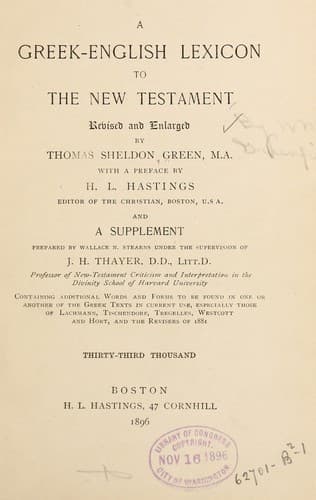
A Greek-English Lexicon to the New TestamentGreenfield, William
Religion
A Greek-English Lexicon to the New Testament
Greenfield, William
Bible. New Testament -- Dictionaries -- English; Greek language, Biblical -- Dictionaries -- English
to teach other or different doctrine, and spc. what is
foreign to the Christian religion, 1 Ti. 1.3; 6.3. N.T.
Ἑτεροζυγέω, ῶ, (ἕτερος & ζυγός)
to be unequally yoked or matched, 2 Co. 6.14.
Ἕτερος, α, ον,
other, another, some other, Mat. 8.21; 12.45; met. different,
Lu. 9.29, et al.; ὁ ἕτερος, the other of two, Mat. 6.24; τῇ ἑτέρᾳ,
the next day, Ac. 20.15; 27.3; ὁ ἕτερος, one's neighbour,
Ro. 13.8, et al.; foreign, strange, Ac. 2.4. 1 Co. 14.21;
illicit, Jude 7:
whence
Ἑτέρως,
adv. otherwise, differently, Phi. 3.15.
Ἔτι
adv. yet, still, Mat. 12.46; still, further, longer, Lu. 16.2;
further, besides, in addition, Mat. 18.16; with a compar., yet,
still, Phi. 1.9.
Ἑτοιμάζω, (ἕτοιμος)
f. άσω,
to make ready, prepare, Mat. 22.4; 26.17, et al.:
whence
Ἑτοιμασία, ας, ἡ,
preparation; preparedness, readiness, alacrity, Ep. 6.15.
Ἕτοιμος, η, ον, ὁ, ἡ, also ἑτοῖμος,
ready, prepared, Mat. 22.4, 8. Mar. 14.15, et al.:
whence
Ἑτοίμως,
adv. in readiness, preparedly, Ac. 21.13, et al.
Ἔτος, εος, τό,
a year, Lu. 2.41; 3.23, et al.
Εὖ
adv. well, good, happily, rightly, Mar. 14.7. Ac. 15.29;
well! well done! Mat. 25.21, 23, et al.
Εὐαγγελίζω,
f. ίσω,
to address with good tidings, Re. 10.7; 14.6; but elsewhere
mid. εὐαγγελίζομαι, to proclaim as good tidings, to announce
good tidings of, Lu. 1.19, et al.; absol. to announce the good
tidings of the gospel, Lu. 4.18; 9.6, et al.; pass. to be
announced as good tidings, Lu. 16.16; to be addressed with good
tidings, Mat. 11.5. Lu. 7.22. He. 4.2.
Εὐαγγέλιον, ου, τό, (εὖ & ἄγγελος)
glad tidings, good or joyful news, Mat. 4.23; 9.35; the gospel,
doctrines of the gospel, Mat. 26.13. Mar. 8.35; meton. the
preaching of, or instruction in the gospel, 1 Co. 4.15; 9.14,
et al.
Εὐαγγελιστής, οῦ, ὁ, (εὐαγγελίζω)
pr. one who announces glad tidings; an evangelist, preacher of
the gospel, teacher of the Christian religion, Ac. 21.8.
Ep. 4.11. 2 Ti. 4.5. N.T.
Εὐαρεστέω, ῶ,
f. ήσω, p. εὐηρέστηκα,
to please well, He. 11.5, 6; pass. to take pleasure in, be well
pleased with, He. 13.6: (L.G.)
from
Εὐάρεστος, ου, ὁ, ἡ, τό, -ον, (εὖ & ἀρεστός, fr. ἀρέσκω)
well pleasing, acceptable, grateful, Ro. 12.1, 2, et al.:
whence
Εὐαρέστως,
adv. acceptably, He. 12.28.
Εὐγενής, έος, οῦς, ὁ, ἡ, (εὖ & γένος)
well born, of high rank, honourable; Lu. 19.12. 1 Co. 1.26;
generous, ingenuous, candid, Ac. 17.11.
Εὐδία, ας, ἡ, (εὖ & Ζεύς, Διός, Jupiter, lord of the air and heavens)
serenity of the heavens, a cloudless sky, fair or fine weather,
Mat. 16.2.
Εὐδοκέω, ῶ, (εὖ & δοκέω)
to think well, approve, acquiesce, take delight or pleasure,
Mat. 3.17; 17.5. Mar. 1.11. Lu. 3.22; 12.32, et al.: (L.G.) whence
Εὐδοκία, ας, ἡ,
approbation; good will, favour, Lu. 2.14; good pleasure,
purpose, intention, Mat. 11.26. Lu. 10.21; Ep. 1.5, 9.
Phi. 2.13; by impl. desire, Ro. 10.1.
Εὐεργεσία, ας, ἡ, (εὐεργέτης)
Public-domain text, read in full here on John Shaqi.
Reviews
Reviews
No reviews yet
Be the first to share your thoughts on this work.
Elsewhere in the archive
Join the Discussion
Join the discussion
Sign in to leave a comment or review.
Sign InorCreate an account