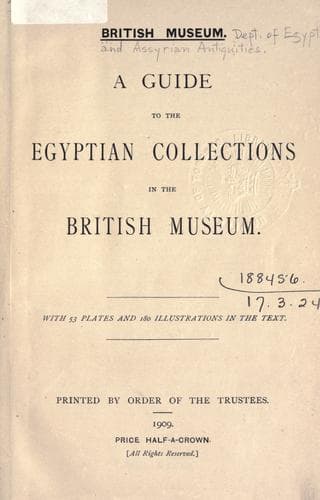
A guide to the Egyptian collections in the British MuseumBritish Museum. Department of Egyptian and Assyrian Antiquities
History
A guide to the Egyptian collections in the British Museum
British Museum. Department of Egyptian and Assyrian Antiquities
Egypt -- Antiquities
𓆥𓍹𓁛𓁩𓋴𓇛𓄣𓏤𓍉𓈖𓍺 S-NETCHEM-ȦB-RĀ SETEP-EN-ȦMEN, 𓅭𓇳 son of the
Sun, 𓍹𓁩𓌻𓂡𓅃𓎳𓏏𓊖𓍺 NEKHT-ḤERU-ḤEBT-MERI-ȦMEN. (NEKTANEBÊS.)
𓆥𓍹𓇳𓁹𓌷𓏏𓂝𓈖𓍺 RĀ-ȦRI-EN-MAĀT, 𓅭𓇳 son of the Sun,
𓍹𓏎𓇯𓀭𓆓𓁷𓏤𓍉𓈖𓍺 TCHE-ḤRȦ-SETEP-EN-ȦN-ḤER.
𓆥𓍹𓇳𓆣𓂓𓍺 KHEPER-KA-RĀ, 𓅭𓇳 son of the Sun, 𓍹𓈖𓆱𓐍𓏏𓂡𓃭𓆑𓍺
NEKHT-NEB-F. (NEKTANEBOS.)
𓆥𓍹𓁬𓁛𓈖𓍉𓈘𓍺 SETEP-EN-RĀ-MERI-ȦMEN, 𓅭𓇳 son of the Sun,
𓍹𓄿𓃭𓎡𓊃𓇋𓈖𓂧𓂋𓊃𓍺 ALEKSȦNṬRES. (ALEXANDER THE GREAT.)
𓎟𓇿𓇿 Neb taui 𓍹𓁞𓁩𓍉𓈖𓈘𓍺 SETEP-EN-RĀ-MERI-ȦMEN, 𓅭𓇳 son of
the Sun, 𓍹𓊪𓉔𓇌𓅱𓃭𓇌𓅱𓊪𓍯𓋴𓍺 PHIULIUPUAS. (PHILIP ARRHIDAEUS.)
𓆥𓍹𓇳𓀠𓄣𓍉𓈖𓇋𓏠𓈖𓍺 RĀ-QA-ȦB-SETEP-EN-ȦMEN, 𓅭𓇳 son of the Sun,
𓍹𓄿𓃭𓎡𓊃𓇋𓈖𓂧𓂋𓊃𓍺 ALEKSȦNṬRES. (ALEXANDER II.)
𓆥𓍹𓁞𓁩𓍉𓈖𓈘𓍺 SETEP-EN-RĀ-MERI-ȦMEN, 𓅭𓇳 son of the Sun,
𓍹𓊪𓂧𓅱𓃭𓐝𓇌𓋴𓍺 PṬULMIS. (PTOLEMY I. SOTER I.)
𓆥𓍹𓇳𓄊𓂓𓏤𓇋𓏠𓈖𓈘𓍺 RĀ-USR-KA-MERI-ȦMEN, 𓅭𓇳 son of the Sun,
𓍹𓊪𓏏𓃭𓏲𓐝𓇌𓋴𓍺 PṬULMIS. (PTOLEMY II. PHILADELPHUS.)
𓆥𓍹𓊹𓇶𓊹𓄯𓈖𓊪𓏏𓎛𓍉𓈖𓁹𓐙︂𓁞𓁩𓌂𓋹𓍺
NETERUI-PERUI-ĀĀ-EN-PTAḤ-SETEP-EN-ȦMEN-ȦRI-MAĀT-RĀ-SEKHEM-ĀNKH,
𓅭𓇳 son of the Sun, 𓍹𓊪𓏏𓍯𓃭𓐝𓇌𓋴𓋹𓆓𓏏𓇾𓊪𓏏𓎛𓈘𓍺 PTUALMIS ĀNKH
TCHETTA PTAḤ MERI. PTOLEMY (IX. EUERGETES II.), living for
ever, beloved of PTAḤ.
𓎟𓇾𓇾 Nebt taui Lady of two lands,
𓍹𓈎𓃭𓄿𓊪𓂧𓂋𓄿𓏏𓆇𓆓𓂧𓏏𓏲𓏌𓋴𓂧𓂋𓄿𓊪𓏌𓏏𓆇𓍺 QLAPEṬRAT TCHEṬTU-NES
ṬRAPENET. CLEOPATRA, called TRYPHAENA.
𓇴𓆇 Rā sa son of the Sun, 𓃭𓈍𓏦 neb khāu lord of diadems,
𓍹𓎡𓇌𓋴𓃭𓊃𓋹𓆓𓏏𓇾𓊪𓏏𓎛𓊨𓏏𓆇𓈘𓍺 KISERES ĀNKH TCHETTA PTAḤ ȦSET
MERI CAESAR, living for ever, of PTAḤ and ISIS beloved.
FOOTNOTES
[1] The Peninsula of Sinai has been a province of Egypt for about 6,000
years.
[2] To these must now be added the Barrage at Esna.
[3] Names printed in heavy type are Egyptian; those in capitals are
Greek, and those _in italics_ are the names by which the places are known
by the modern Arabs.
[4] 𓄔𓂋𓎡𓈖𓀀𓂝𓎡𓄤𓆑𓂋𓄔𓅓𓈖𓂋𓍿𓀀𓁐𓏪𓌞𓋴𓂻
𓉔𓂋𓅱𓇳𓏤𓄤𓆑𓂋𓋴𓐍𓂜𓎖𓂝𓀁.
[5] 𓂜𓅨𓂧𓀉𓄣𓎡𓄱𓋴𓇋𓅱𓈗𓀁𓏶𓏲𓀁𓏏𓐍𓏲𓄣𓇛𓇛𓇛𓇛
𓂺𓁹𓉔𓇳𓄤𓌞𓋴𓄣𓌆𓇳𓐝𓂋𓏏𓂞𓎖𓆇𓅱𓄧𓏏𓀁𓐝𓄣𓏤𓎡𓇋𓐍𓏭𓊃𓆳𓏏𓏦
𓇋𓍿𓏤𓁷𓁶𓇾𓏤𓈇.
[6] For the hieratic text see _Papyrus Ebers_, Plate 56.
[7] Ibid., Plate 87.
[8] These words mean: “If thou wouldst be a perfect man make thou [thy]
son well pleasing to God.”
[9] These words mean: “I have given bread to the famishing, water to the
thirsty, clothes to the naked, and a boat to him that was shipwrecked.”
[10] A recent view makes “papyrus” to be derived from the conjectural
name _pa-p-ior_ “that which is of the river.”
Public-domain text, read in full here on John Shaqi.
Reviews
Reviews
No reviews yet
Be the first to share your thoughts on this work.
Elsewhere in the archive
Join the Discussion
Join the discussion
Sign in to leave a comment or review.
Sign InorCreate an account