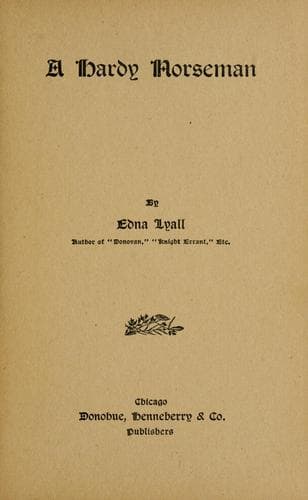
British -- Norway -- Fiction; Conduct of life -- Fiction; Norwegians -- England -- Fiction
“You can go back to the shop, Darnell,” he said.
The man bowed and withdrew, leaving Frithiof still standing
half-bewildered where the detective had left him, the cause of all his
misery lying on the writing-table before him, just as fresh and
crisp-looking as when it had issued from the Bank of England.
“This has been a sad business, Frithiof,” said Mr. Boniface, leaning his
elbow on the mantel-piece, and looking with his clear, kindly eyes at
the young Norwegian. “But I am convinced that you had no idea what you
were doing, and I should not dream of prosecuting you, or discharging
you.”
Poor Frithiof was far too much stunned to be able to feel any gratitude
for this. Mr. Horner, however, left him no time to reply.
“I think you have taken leave of your senses, Boniface,” he said
vehemently. “Save yourself the annoyance of prosecuting, if you like;
but it is grossly unfair to the rest of your employees to keep a thief
in your house. Not only that, but it is altogether immoral; it is
showing special favor to vice; it is admitting a principle which, if
allowed, would ruin all business life. If there is one thing noticeable
in all successful concerns it is that uncompromising severity is shown
to even trifling errors—even to carelessness.”
“My business has hitherto been successful,” said Mr. Boniface quietly,
“and I have never gone on that principle, and never will. Why are we to
have a law of mercy and rigidly to exclude it from every-day life? But
that is the way of the world. It manages, while calling itself
Christian, to shirk most of Christ’s commands.”
“I tell you,” said Mr. Horner, who was now in a towering passion, “that
it is utterly against the very rules of religion. The fellow is not
repentant; he persists in sticking to a lie, and yet you weakly forgive
him.”
“If,” said Mr. Boniface quietly, “you knew a little more of Frithiof
Falck you would know that it is quite impossible that he could
consciously have taken the money. When he took it he was not himself. If
he had wanted to hide it—to steal it—why did he actually return to the
shop with it in his possession? He might easily have disposed of it
while he was out.”
“If that is your ground, then I object to having a man on my premises
who is afflicted with kleptomania. But it is not so. The fellow is as
long-headed and quick-witted as any one I know; he has managed to
hoodwink you, but from the first I saw through him, and knew him to be a
designing—”
“Sir,” broke in Frithiof, turning to Mr. Boniface—his bewildered
consternation changing now to passionate earnestness—“this is more than
I can endure. For God’s sake call back the detective, examine further
into this mystery; there _must_ be some explanation!”
“How can any man examine further?” said Mr. Boniface sadly. “The note is
missed, and is actually found upon you. The only possible explanation is
that you were not yourself when you took it.”
Public-domain text, read in full here on John Shaqi.
Reviews
Reviews
No reviews yet
Be the first to share your thoughts on this work.
Elsewhere in the archive
Join the Discussion
Join the discussion
Sign in to leave a comment or review.
Sign InorCreate an account