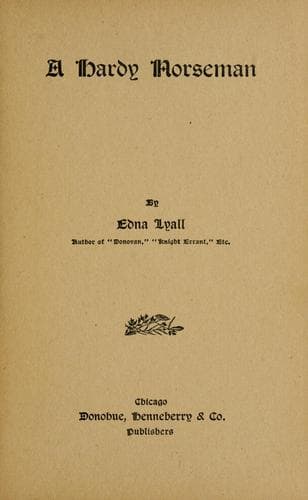
British -- Norway -- Fiction; Conduct of life -- Fiction; Norwegians -- England -- Fiction
A fine, drizzling rain was falling; in the early morning the shabby,
dirty houses looked their very worst. Swarms of grimy little children
had been turned out of their homes, and were making their way to morning
school, and hundreds of busy men and women were hurrying through the
streets, all with worn, anxious-looking faces. As he walked to the
railway station Frithiof felt almost overpowered by the desolateness of
the place. To be a mere unit in this unthinking, unheeding crowd, to be
pushed and jostled by the hurrying passengers, who all walked as if
their very lives depended on their speed, to hear around him the rapidly
spoken foreign language, with its strange north-country accent, all made
him feel very keenly that he was indeed a foreigner in a strange land.
He was glad to be once more in a familiar-looking train, and actually on
his way to London; and soon all these outer impressions faded away in
the absorbing consciousness that he was actually on his way to
Blanche—that on the very next day he might hope to see her again.
Fortunately the Tuesday proved to be a lovely, still, autumn day. He did
not like to call upon Mr. Morgan till the afternoon, and, indeed,
thought that he should scarcely find him at home earlier, so he roamed
about London, and looked at his watch about four times an hour, till at
length the time came when he could call a hansom and drive to Lancaster
Gate.
There are some houses which the moment you enter them suggest to you the
idea of money. The Morgans’ house was one of these; everything was
faultlessly arranged; your feet sank into the softest of carpets, you
were served by the most obsequious of servants, all that was cheap or
common or ordinary was banished from view, and you felt that the chair
you sat on was a very superior chair, that all the pictures and
ornaments were the very best that could be bought, and that ordinary
people who could not boast of a very large income were only admitted
into this aggressively superior dwelling on sufferance. With all its
grandeur, it was not a house which tempted you to break the tenth
commandment; it inspired you with a kind of wonder, and if the guests
had truly spoken the thought which most frequently occurred to them, it
would have been: “I wonder now what he gave for this? It must have cost
a perfect fortune!”
Public-domain text, read in full here on John Shaqi.
Reviews
Reviews
No reviews yet
Be the first to share your thoughts on this work.
Join the Discussion
Join the discussion
Sign in to leave a comment or review.
Sign InorCreate an account