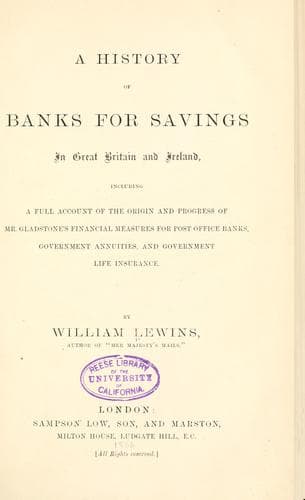
A History of Banks for Savings in Great Britain and IrelandLewins, William
History
A History of Banks for Savings in Great Britain and Ireland
Lewins, William
Postal savings banks -- Great Britain; Savings banks -- Great Britain
Baines and others, either expressed strong objections to
the bill as a whole, or else took exceptions to some of its
provisions. The debate was then adjourned.
During the interval, and when the bill was under discussion in the
House, a great meeting of the working classes was called in London,
and held in Exeter Hall, Mr. Ayrton presiding. The object of the
gathering was to petition against the measure; but independent working
men--by which is meant those who had no interested motives in opposing
the scheme--mustered so strongly on the other side, that the Chairman
could not decide on which side the majority lay. There were other
public meetings held, some in favour, others in opposition; and
although hundreds of petitions were presented from members of Friendly
Societies, most of which were got up on one form, there were many
others of a far more important character emanating from Corporations
and Boards of Guardians, who expressed a hope that the House would not
withhold so great a boon to the working classes.
On the 17th of March, _Sir Minto Farquhar_, in a long speech, moved
that the bill should be referred to a Select Committee. _Mr. Horsfall_
seconded the motion. Both members replied to Mr. Gladstone's attack on
Friendly Societies, though with little effect. Several members warmly
supported Mr. Gladstone, and thought no cause had been shown for
delay. _Mr. Estcourt_, while approving the principles of the measure,
saw great difficulties about it, and thought it ought to be referred
to a Committee. _Mr. Göschen_, in an able speech, which showed that he
had mastered the subject in all its bearings, answered the objections
which had been raised to the bill, and said that though he represented
in that House more insurance managers and directors than any other
member, he was not afraid to say that the opposition to the bill was
entirely owing to the efforts of those who fancied it would deal a
blow at their private interests. He was convinced of the wisdom and
policy of the measure, which was well worthy of the character of the
right honourable gentleman who had proposed it, and which would
without doubt leave a mark on the history of the session. The debate
was again adjourned.
Public-domain text, read in full here on John Shaqi.
Reviews
Reviews
No reviews yet
Be the first to share your thoughts on this work.
Elsewhere in the archive
Join the Discussion
Join the discussion
Sign in to leave a comment or review.
Sign InorCreate an account