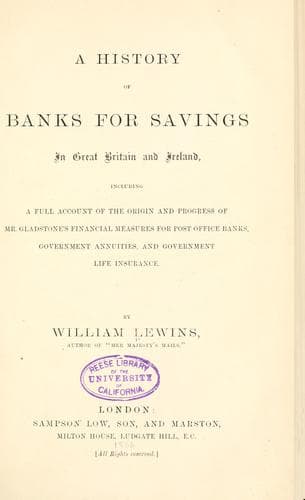
A History of Banks for Savings in Great Britain and IrelandLewins, William
History
A History of Banks for Savings in Great Britain and Ireland
Lewins, William
Postal savings banks -- Great Britain; Savings banks -- Great Britain
We think that to a very large extent the influence which masters must
exercise over their workmen, or which they could not fail to exercise
if they were to show a proper degree of interest in their
subordinates, has never yet been exercised. If reason, persuasion,
entreaty of a certain kind, alike fail--as they may often have
done--to induce saving habits and due provident provision for
themselves and families, we confess a difficult problem presents
itself. This difficulty has been felt for years. Forty years ago the
_Quarterly Review_, in an able article, said that Savings Banks ought
to have formed a sinking fund before that time for the abolition of
poor rates: "If the present state of things continues," says the
writer, "it should become a question whether the master ought not to
deposit in the Savings Bank at least a shilling in the pound of all
wages paid by him, to be placed to the account of the individuals whom
he employs." Several times since this was written, the _Quarterly
Review_ has returned to the charge. For many years our system of Poor
Laws has rigidly assessed property for the relief of poverty, and
secured the necessaries of life for all the destitute, no matter how
largely they themselves may have been answerable for their destitute
condition. With some beneficial changes the law stands the same, and
is scrupulously enforced.
It is very clear that many men's wages are so high in good times,
that, if they worked steadily and lived with moderation, they might
easily reserve out of them a fund of supply against times of want,
which would carry them through till their trade revived. The immense
power in the hands of the working classes to promote their own
self-dependence is illustrated by the enormous sums spent by these
classes alone in mere indulgence; and it is shown again, in the
immense funds raised amongst them to support combinations and strikes.
That thousands will not use the means they have is proved by their
excesses, their prodigality, the recklessness of their expenditure,
the division of the days of the week into days of work and days of
gross and obstinate idleness; and in much of this--regarding the
result which follows to themselves, their wives and families, if they
have the misfortune to have them--there is perhaps more real
delinquency than in many of the crimes for which penal statutes have
been framed.
Public-domain text, read in full here on John Shaqi.
Reviews
Reviews
No reviews yet
Be the first to share your thoughts on this work.
Elsewhere in the archive
Join the Discussion
Join the discussion
Sign in to leave a comment or review.
Sign InorCreate an account