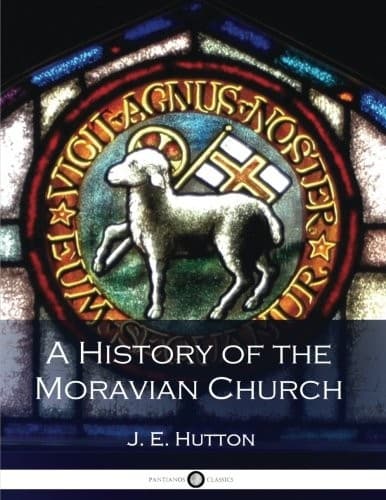
A History of the Moravian ChurchHutton, J. E. (Joseph Edmund)
Religion
A History of the Moravian Church
Hutton, J. E. (Joseph Edmund)
Moravian Church -- History
It remains to answer two important questions. As we study the life of
the Herrnhut Brethren, we cannot possibly fail to notice how closely
their institutions resembled the old institutions of the Bohemian
Brethren. We have the same care for the poor, the same ascetic ideal of
life, the same adherence to the word of Scripture, the same endeavour to
revive Apostolic practice, the same semi-socialistic tendency, the
same aspiration after brotherly unity, the same title, "Elder," for the
leading officials, and the same, or almost the same, method of electing
some of these officials by Lot. And, therefore, we naturally ask the
question, how far were these Brethren guided by the example of their
fathers? The reply is, not at all. At this early stage in their history
the Moravian refugees at Herrnhut knew absolutely nothing of the
institutions of the Bohemian Brethren.[84] They had no historical records
in their possession; they had not preserved any copies of the ancient
laws; they brought no books but hymn-books across the border; and they
framed their rules and organized their society before they had even
heard of the existence of Comenius's "Account of Discipline." The whole
movement at Herrnhut was free, spontaneous, original. It was not an
imitation of the past. It was not an attempt to revive the Church of the
Brethren. It was simply the result of Zinzendorf's attempt to apply the
ideals of the Pietist Spener to the needs of the settlers on his estate.
The second question is, what was the ecclesiastical standing of the
Brethren at this time? They were not a new church or sect. They had
no separate ministry of their own. They were members of the Lutheran
Church, regarded Rothe still as their Pastor, attended the Parish
Church on Sundays, and took the Communion there once a month; and what
distinguished them from the average orthodox Lutheran of the day was,
not any peculiarity of doctrine, but rather their vivid perception of a
doctrine common to all the Churches. As the Methodists in England a few
years later exalted the doctrine of "conversion," so these Brethren at
Herrnhut exalted the doctrine of the spiritual presence of Christ. To
them the ascended Christ was all in all. He had preserved the "Hidden
Seed." He had led them out from Moravia. He had brought them to a
watch-tower. He had delivered them from the secret foe. He had banished
the devouring demon of discord, had poured out His Holy Spirit upon them
at their memorable service in the Parish Church, and had taught them
to maintain the unity of the spirit in the bond of peace. He was the
"Bridegroom of the Soul," the "Blood Relation of His People," the
"King's Son seeking for His Bride, the Church," the "Chief Elder
pleading for the Church before God." And this thought of the living and
reigning Christ was, therefore, the ruling thought among the Brethren.
He had done three marvellous things for the sons of men. He had given
Public-domain text, read in full here on John Shaqi.
Reviews
Reviews
No reviews yet
Be the first to share your thoughts on this work.
Elsewhere in the archive
Join the Discussion
Join the discussion
Sign in to leave a comment or review.
Sign InorCreate an account