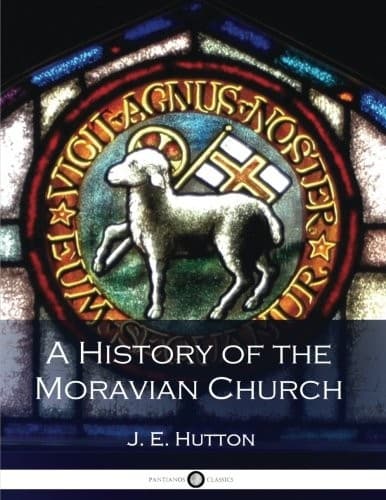
A History of the Moravian ChurchHutton, J. E. (Joseph Edmund)
Religion
A History of the Moravian Church
Hutton, J. E. (Joseph Edmund)
Moravian Church -- History
As John Wesley returned to England from his three years' stay in
America, he found himself in a sorrowful state of mind. He had gone
with all the ardour of youth; he returned a spiritual bankrupt. On this
subject the historians have differed. According to High-Church Anglican
writers, John Wesley was a Christian saint before he ever set eyes on
Boehler's face;[108] according to Methodists he had only a legal religion
and was lacking in genuine, saving faith in Christ. His own evidence on
the questions seems conflicting. At the time he was sure he was not yet
converted; in later years he inclined to think he was. At the time he
sadly wrote in his Journal, "I who went to America to convert others
was never myself converted to God"; and then, years later, he added the
footnote, "I am not sure of this." It is easy, however, to explain
this contradiction. The question turns on the meaning of the word
"converted." If a man is truly converted to God when his heart throbs
with love for his fellows, with a zeal for souls, and with a desire to
do God's holy will, then John Wesley, when he returned from America,
was just as truly a "converted" man as ever he was in later life. He was
devout in prayer; he loved the Scriptures; he longed to be holy; he was
pure in thought, in deed, and in speech; he was self-denying; he had
fed his soul on the noble teaching of Law's "Serious Call"; and thus, in
many ways, he was a beautiful model of what a Christian should be. And
yet, after all, he lacked one thing which Peter Boehler possessed. If
John Wesley was converted then he did not know it himself. He had no
firm, unflinching trust in God. He was not sure that his sins were
forgiven. He lacked what Methodists call "assurance," and what St. Paul
called "peace with God." He had the faith, to use his own distinction,
not of a son, but only of a servant. He was good but he was not happy;
he feared God, but he did not dare to love Him; he had not yet attained
the conviction that he himself had been redeemed by Christ; and if this
conviction is essential to conversion, then John Wesley, before he met
Boehler, was not yet a converted man. For practical purposes the matter
was of first importance. As long as Wesley was racked by doubts he could
never be a persuasive preacher of the Gospel. He was so distracted about
himself that he could not yet, with an easy mind, rush out to the rescue
of others. He had not "a heart at leisure from itself to soothe and
sympathize." The influence of Boehler was enormous. He saw where
Wesley's trouble lay, and led him into the calm waters of rest.
"My brother, my brother," he said, "that philosophy of yours must be
purged away."[109]
John Wesley did not understand. For three weeks the two men discussed
the fateful question; and the more Wesley examined himself the more sure
he was he did not possess "the faith whereby we are saved." One day he
felt certain of his salvation; the next the doubts besieged his door
again.
Public-domain text, read in full here on John Shaqi.
Reviews
Reviews
No reviews yet
Be the first to share your thoughts on this work.
Elsewhere in the archive
Join the Discussion
Join the discussion
Sign in to leave a comment or review.
Sign InorCreate an account