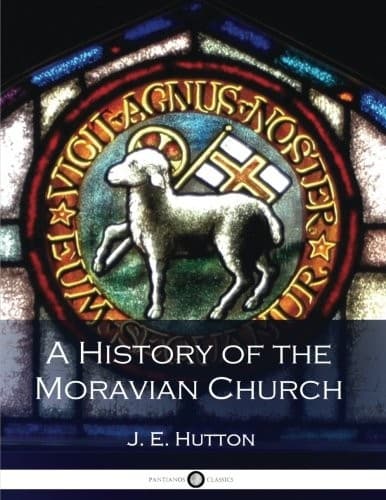
A History of the Moravian ChurchHutton, J. E. (Joseph Edmund)
Religion
A History of the Moravian Church
Hutton, J. E. (Joseph Edmund)
Moravian Church -- History
In order to have a clear view of the events recorded in this chapter, we
must bear in mind that the Brethren worked according to a definite Plan;
they generally formed their "Plan" by means of the Lot; and this "Plan,"
speaking broadly, was of a threefold nature. The Brethren had three
ideals: First, they were not sectarians. Instead of trying to extend the
Moravian Church at the expense of other denominations, they consistently
endeavoured, wherever they went, to preach a broad and comprehensive
Gospel, to avoid theological disputes, to make peace between the sects,
and to unite Christians of all shades of belief in common devotion to a
common Lord. Secondly, by establishing settlements, they endeavoured to
unite the secular and the sacred. At these settlements they deliberately
adopted, for purely religious purposes, a form of voluntary religious
socialism. They were not, however, socialists or communists by
conviction; they had no desire to alter the laws of property; and they
established their communistic organization, not from any political
motives, but because they felt that, for the time at least, it would be
the most economical, would foster Christian fellowship, would sanctify
daily labour, and would enable them, poor men though they were, to find
ways and means for the spread of the Gospel. And thirdly, the Brethren
would preach that Gospel to all men, civilized or savage, who had not
heard it before. With these three ideals before us, we trace their
footsteps in North America.
Public-domain text, read in full here on John Shaqi.
Reviews
Reviews
No reviews yet
Be the first to share your thoughts on this work.
Elsewhere in the archive
Join the Discussion
Join the discussion
Sign in to leave a comment or review.
Sign InorCreate an account