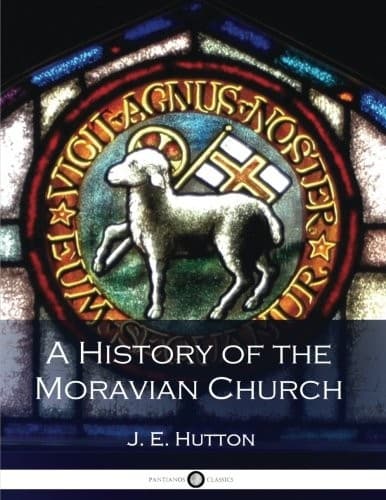
A History of the Moravian ChurchHutton, J. E. (Joseph Edmund)
Religion
A History of the Moravian Church
Hutton, J. E. (Joseph Edmund)
Moravian Church -- History
The Brethren's rules struck deeper still. For law and order the Brethren
had a passion. Each congregation was divided into three classes:
the Beginners, those who were learning the "Questions" and the first
elements of religion; the Proficients, the steady members of the Church;
and the Perfect, those so established in faith, hope and love as to
be able to enlighten others. For each class a separate Catechism was
prepared. At the head, too, of each congregation was a body of civil
Elders. They were elected by the congregation from the Perfect. They
assisted the pastor in his parochial duties. They looked after his
support in case he were in special need. They acted as poor-law
guardians, lawyers, magistrates and umpires, and thus they tried to
keep the people at peace and prevent them from going to law. Every three
months they visited the houses of the Brethren, and inquired whether
business were honestly conducted, whether family worship were held,
whether the children were properly trained. For example, it was one
of the duties of a father to talk with his children at the Sunday
dinner-table on what they had heard at the morning service; and when
the Elder paid his quarterly visit he soon discovered, by examining the
children, how far this duty had been fulfilled.
The Brethren's rules struck deeper still. For the labourer in the field,
for the artizan in the workshop, for the tradesman with his wares, for
the baron and his tenants, for the master and his servants, there were
laws and codes to suit each case, and make every trade and walk in life
serve in some way to the glory of God. Among the Brethren all work was
sacred. If a man was not able to show that his trade was according to
the law of Christ and of direct service to His holy cause, he was not
allowed to carry it on at all. He must either change his calling or
leave the Church. In the Brethren's Church there were no dice makers, no
actors, no painters, no professional musicians, no wizards or seers, no
alchemists, no astrologers, no courtezans or panderers. The whole
tone was stern and puritanic. For art, for music, for letters and for
pleasure the Brethren had only contempt, and the fathers were warned
against staying out at night and frequenting the card-room and the
liquor-saloon. And yet, withal, these stern Brethren were kind and
tender-hearted. If the accounts handed down are to be believed, the
villages where the Brethren settled were the homes of happiness and
peace. As the Brethren had no definite social policy, they did not, of
course, make any attempt to break down the distinctions of rank; and
yet, in their own way, they endeavoured to teach all classes to respect
each other. They enjoined the barons to allow their servants to worship
with them round the family altar. They urged the rich to spend their
money on the poor instead of on dainties and fine clothes. They
forbade the poor to wear silk, urged them to be patient, cheerful and
Public-domain text, read in full here on John Shaqi.
Reviews
Reviews
No reviews yet
Be the first to share your thoughts on this work.
Elsewhere in the archive
Join the Discussion
Join the discussion
Sign in to leave a comment or review.
Sign InorCreate an account