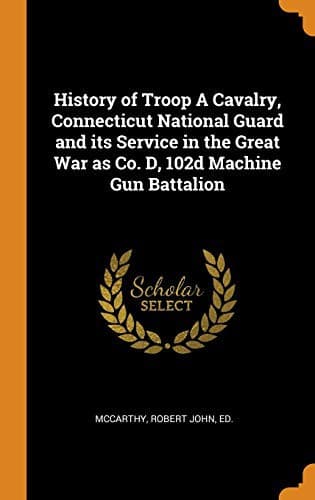
A History of Troop A Cavalry, Connecticut National Guard and Its Service in the Great War as Co. D, 102d Machine Gun Battalion
History
A History of Troop A Cavalry, Connecticut National Guard and Its Service in the Great War as Co. D, 102d Machine Gun Battalion
United States. Army. Machine Gun Battalion, 102nd. Company D; World War, 1914-1918 -- Regimental histories -- United States
Fair weather favored the ships until they started on a course which was
to take them to the north of Ireland, when they met fog, rain and hail
in varying quantities until Sunday, October 21, a day before sighting
the west coast of Scotland, the weather cleared. On the afternoon of
that day an escort of nine British destroyers made its appearance,
bobbing on the large waves like corks in a wash-tub and dashing through
the convoy, flashing their signals with heliographs by day and blinkers
by night.
Wales was sighted on the starboard the morning of October 23 and
that night at 7 o'clock, after waiting for some time in the Mersey
for a pilot, the troops debarked onto Liverpool's famous floating
dock, immediately boarding the queer little English trains, which
waited nearby. On the trip following the men had their first sight of
Englishwomen engaged in men's work and garbed in the unconventional
overalls and jumpers which later became common at home. A short stop
was made at Birmingham where coffee almost as bad as the White River
Junction brand was handed out. Some of the men survived the crush at
the lunch counter to discover later that the patriotic workers there
had given them almost half as much as they had bought. At 4:30 the next
morning the train stopped at Borden and the Battalion hiked about four
miles through the mud in a drizzling rain to Oxley, where watersoaked,
leaky tents were assigned while the cooks used all their magic to coax
a fair meal out of the available rations.
Tramping around in the mud which was at all times ankle deep and often
deeper, a Y. M. C. A. hut was discovered with a small stock of food and
an American in charge. Here change was made from American to English
money and most of the supplies available were purchased. Rest that
night was more or less disturbed and wishes were expressed for that
dry little bunk in the ship. The rain always found a hole just above
the sleepers and there was no way of repairing the leak. At that, the
men fared better than the officers, for the tents of the latter were
located in a wind-swept area and the high winds of the night levelled
them completely.
Public-domain text, read in full here on John Shaqi.
Reviews
Reviews
No reviews yet
Be the first to share your thoughts on this work.
Join the Discussion
Join the discussion
Sign in to leave a comment or review.
Sign InorCreate an account