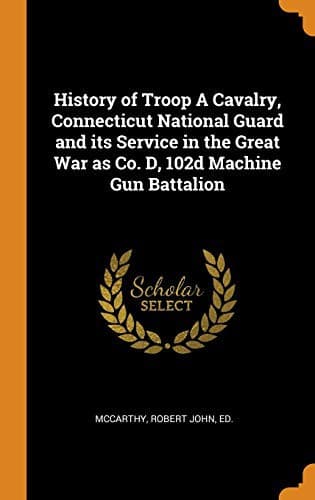
A History of Troop A Cavalry, Connecticut National Guard and Its Service in the Great War as Co. D, 102d Machine Gun Battalion — John Shaqi
A History of Troop A Cavalry, Connecticut National Guard and Its Service in the Great War as Co. D, 102d Machine Gun Battalion
History
A History of Troop A Cavalry, Connecticut National Guard and Its Service in the Great War as Co. D, 102d Machine Gun Battalion
United States. Army. Machine Gun Battalion, 102nd. Company D; World War, 1914-1918 -- Regimental histories -- United States
Shortly after receiving recognition as a militia unit, the Troop was
called together and it was decided that the Second Regiment armory
on Meadow Street was unfitted for cavalry drill, so a committee was
appointed to obtain a site for a new armory. Generous contributions
on the part of prominent citizens enabled the erection of a wooden
structure on the lot at 839 Orange Street. This building was barely
completed when, in January 1905, it was burned to the ground.
Undaunted by this reverse, it was immediately decided to rebuild,
and plans were made to put up a fire-proof structure. Once more men
interested in the success of the Troop aided the building project by
purchasing bonds, and the armory as it now stands was opened with
appropriate ceremony in the Spring of 1906.
When the State bought the armory from the Troop it was suggested to men
who held bonds covering the indebtedness on the building that the Troop
should own a certain number of horses. Release from the payment of many
obligations allowed the purchase of twenty horses in the Fall of 1909,
and these were installed in the stables in the rear of the armory.
Funds to furnish the club rooms and pay interest on the building bonds
were obtained through the willingness of the men to turn into the
treasury the pay they received for the time spent in camp each year
with the other militia units. These were added to from time to time
by receipts from very popular and successful horse shows held in the
winters of 1907, 1908, 1909 and 1910. These shows attracted exhibits
from the best known fanciers in the East, and were famed as society
events. Features of these shows were the crack drill exhibitions given
by squads selected from the Troop's best riders. A military tournament,
which included all competition that could be arranged for mounted men,
followed when horse shows reached the point of exclusiveness they
attained as the automobile came into common use.
During this period the men were being perfected in field work by road
marches and manœuvers. In many of these they were placed under the
command of regular army officers and rode beside troopers from the
regular army, with due credit to their militia training.
Public-domain text, read in full here on John Shaqi.
Reviews
Reviews
No reviews yet
Be the first to share your thoughts on this work.
Join the Discussion
Join the discussion
Sign in to leave a comment or review.
Sign InorCreate an account