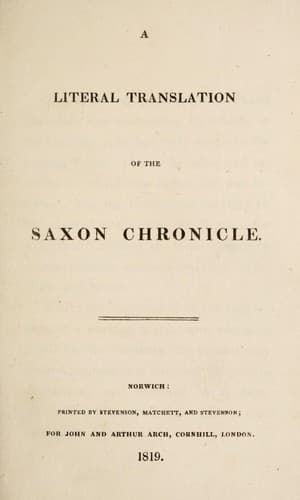
Great Britain -- History -- Anglo-Saxon period, 449-1066 -- Sources
many marks of gold, and many hundred pounds of silver, and this, either
with or without right, and with little need. He was given to avarice
and greedily loved gain. He made large forests for the deer, and
enacted laws therewith, so that whoever killed a hart or a hind should
be blinded. As he forbade killing the deer, so also the boars; and he
loved the tall stags as if he were their father. He also appointed
concerning the hares, that they should go free. The rich complained
and the poor murmured, but he was so sturdy that he recked nought of
them; they must will all that the King willed, if they would live; or
would keep their lands; or would hold their possessions; or would be
maintained in their rights. Alas! that any man should so exalt himself,
and carry himself in his pride over all! May Almighty God shew mercy
to his soul, and grant him the forgiveness of his sins! We have written
concerning him these things, both good and bad, that virtuous men might
follow after the good, and wholly avoid the evil, and might go in the
way that leadeth to the kingdom of heaven.
We may write of many events which happened during this year. In
Denmark, the Danes who were formerly accounted the most loyal of
people, turned to the greatest possible perfidy and treachery, for they
chose King Cnut, and submitted to him, and swore oaths of allegiance
and afterwards they shamefully murdered him in a church.[BI] It also
came to pass in Spain, that the heathen men went forth, and made
war upon the Christians, and brought great part of the country into
subjection to themselves. But the Christian King, whose name was Anphos
(Alfonso), sent to all countries and begged assistance. And allies
flocked to him from every Christian land, and they went forth, and
slew or drove away all the heathens, and they won their land again by
the help of God. The same year also many great men died in this land:
Stigand Bishop of Chichester, and the Abbot of Saint Augustine’s, and
the Abbots of Bath and of Pershore, and the Lord of them all William
King of England, concerning whom we have spoken above.
Public-domain text, read in full here on John Shaqi.
Reviews
Reviews
No reviews yet
Be the first to share your thoughts on this work.
Elsewhere in the archive
Join the Discussion
Join the discussion
Sign in to leave a comment or review.
Sign InorCreate an account