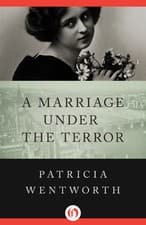
France -- History -- Revolution, 1789-1799 -- Fiction
Mademoiselle felt the angry tears come sharply to her eyes. Why should
this man move her thus? What, after all, did his opinions matter to
her? She chid her own imprudence in having lent herself to this
unseemly argument. She had already trusted him too much. A little
tremour crept over her heart—she remembered the September madness, the
horror, and the blood,—and the colour ebbed slowly from her cheeks as
she bent forward and took her pen again.
Dangeau saw her whiten, and in an instant his mood changed. Her hand
shook, and he guessed the cause. He had frightened her; she did not
trust him. The thought stabbed very deep, but he too fell silent, and
resumed his work, though with a heavy heart. When she rose to go, he
looked up, hesitated a moment, and then said:
"Citoyenne."
"Yes, Citizen."
"Citoyenne, it would be wiser not to express to others the sentiments
you have avowed to-night. They are not safe—for Marie Roche."
"No, Citizen."
Mademoiselle’s back was towards him, and he had no means of discovering
how she took his warning.
"That process of purging, of which I spoke, goes forward apace," he
continued slowly; "those who have sinned against the people must expiate
their sins, it may be in blood."
"Yes, Citizen."
Something drove him on—that subtle instinct which drives us all at
times, the desire to probe deeply, to try to the uttermost.
"They and their innocent children, perhaps," he said gloomily, and her
own case was in his mind. "What do your priests say—is it not ’to the
third and fourth generation’?"
She turned and faced him then, very pale, but quite composed. There was
no coward blood in her.
"You are trying to tell me that you will denounce me," she said quietly.
The words fell like a thunderbolt. All the blood in Dangeau’s body
seemed to rush violently to his head, and for a moment he lost himself.
He was by her side, his hands catching at her shoulders, where they lay
heavy, shaking.
"Look me in the face and say that again!" he thundered in the voice his
section knew.
"Ah!" cried Mademoiselle,—"what do you mean, Monsieur? This is an
outrage, release me!"
His hands fell, but his eyes held hers. They blazed upon her like
heated steel, and the anger in them burned her.
"Ah! you dare not say it again," he said very low.
"Monsieur, I dare." Her gaze met his, and a strange excitement
possessed her. She would have been less than woman had she not felt her
power—more than woman had she not used it.
Dangeau spoke again, his voice muffled with passion. "You dare say I,
Jacques Dangeau, am a spy, an informer, a betrayer of trust?"
Mademoiselle’s composure began to return. This man shook when he
touched her; she was stronger than he. There was no danger.
"Not quite that, Citizen," she said quietly. "But I did not know what a
patriot might consider his duty."
Public-domain text, read in full here on John Shaqi.
Reviews
Reviews
No reviews yet
Be the first to share your thoughts on this work.
Join the Discussion
Join the discussion
Sign in to leave a comment or review.
Sign InorCreate an account