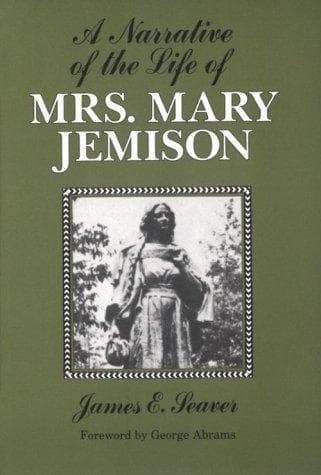
A Narrative of the Life of Mrs. Mary JemisonSeaver, James E. (James Everett)
History
A Narrative of the Life of Mrs. Mary Jemison
Seaver, James E. (James Everett)
Jemison, Mary, 1743-1833; Seneca Indians
They believe there are many of these, and that next to the author of
evil, they are the greatest scourge to their people. The term witch, by
them, is used both in the masculine and feminine gender, and denotes a
person to whom the evil deity has delegated power to inflict diseases,
cause death, blast corn, bring bad weather, and in short to cause
almost any calamity to which they are liable. With this impression, and
believing that it is their actual duty to destroy, as far as lies in
their power, every source of unhappiness, it has been a custom among
them from time immemorial, to destroy every one that they could convict
of so heinous a crime; and in fact there is no reprieve from the
sentence.
Mrs. Jemison informed us that more or less who had been charged with
being witches, had been executed in almost every year since she has
lived on the Genesee. Many, on being suspected, made their escape:
while others, before they were aware of being implicated, have been
apprehended and brought to trial. She says that a number of years ago,
an Indian chased a squaw, near Beard's Town, and caught her; but on
the account of her great strength she got away. The Indian, vexed and
disappointed, went home, and the next day reported that he saw her
have fire in her mouth, and that she was a witch. Upon this she was
apprehended and killed immediately. She was Big-tree's cousin, Mrs.
Jemison says she was present at the execution. She also saw one other
killed and thrown into the river.
Col. Jeremiah Smith, of Leicester, near Beard's Town, saw an Indian
killed by his five brothers, who struck him on the head with their
tomahawks at one time. He was charged with being a witch, because of his
having been fortunate enough, when on a hunting party, to kill a number
of deer, while his comrades failed of taking any.
Col. Smith also saw a squaw, who had been convicted of being a witch,
killed by having small green whips burnt till they were red hot, but
not quite coaled, and thrust down her throat. From such trifling causes
thousands have lost their lives, and notwithstanding the means that
are used for their reformation, the pagans will not suffer "a witch to
live."
* * * * *
OF THE MANNER OF FARMING, AS PRACTISED BY THE INDIAN WOMEN.
It is well known that the squaws have all the labor of the field to
perform, and almost every other kind of hard service, which, in civil
society, is performed by the men. In order to expedite their business,
and at the same time enjoy each other's company, they all work together
in one field, or at whatever job they may have on hand. In the spring
they choose an old active squaw to be their driver and overseer when at
labor, for the ensuing year. She accepts the honor, and they consider
themselves bound to obey her.
Public-domain text, read in full here on John Shaqi.
Reviews
Reviews
No reviews yet
Be the first to share your thoughts on this work.
Elsewhere in the archive
Join the Discussion
Join the discussion
Sign in to leave a comment or review.
Sign InorCreate an account