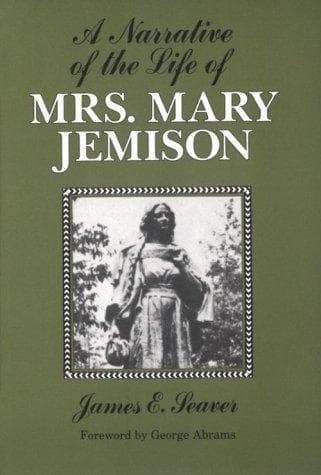
A Narrative of the Life of Mrs. Mary JemisonSeaver, James E. (James Everett)
History
A Narrative of the Life of Mrs. Mary Jemison
Seaver, James E. (James Everett)
Jemison, Mary, 1743-1833; Seneca Indians
The deceased having been laid out in his best clothing, is put into a
coffin of boards or bark, and with him is deposited, in every instance,
a small cup and a cake. Generally two or three candles are also put into
the coffin, and in a few instances, at the burial of a great man, all
his implements of war are buried by the side of the body. The coffin is
then closed and carried to the grave. On its being let down, the person
who takes the lead of the solemn transaction, or a Chief, addresses the
dead in a short speech, in which he charges him not to be troubled about
himself in his new situation, nor on his journey, and not to trouble his
friends, wife or children, whom he has left. Tells him that if he meets
with strangers on his way, he must inform them what tribe he belongs
to, who his relatives are, the situation in which he left them, and that
having done this, he must keep on till he arrives at the good fields in
the country of Nauwaneu. That when he arrives there he will see all his
ancestors and personal friends that have gone before him; who, together
with all the Chiefs of celebrity, will receive him joyfully, and furnish
him with every article of perpetual happiness.
The grave is now filled and left till evening, when some of the nearest
relatives of the dead build a fire at the head of it, near which they
set till morning. In this way they continue to practise nine successive
nights, when, believing that their departed friend has arrived at the
end of his journey, they discontinue their attention. During this time
the relatives of the dead are not allowed to dance.
Formerly, frolics were held, after the expiration of nine days, for
the dead, at which all the squaws got drunk, and those were the
only occasions on which they were intoxicated: but lately those are
discontinued, and squaws feel no delicacy in getting inebriated.
* * * * *
OF THEIR CREDULITY.
As ignorance is the parent of credulity, it is not a thing to be
wondered at that the Indians should possess it in a great degree, and
even suffer themselves to be dictated and governed by it in many of the
most important transactions of their lives.
They place great confidence in dreams, attach some sign to every
uncommon circumstance, and believe in charms, spirits, and many
supernatural things that never existed, only in minds enslaved to
ignorance and tradition: but in no instance is their credulity so
conspicuous, as in their unalterable belief in witches.
Public-domain text, read in full here on John Shaqi.
Reviews
Reviews
No reviews yet
Be the first to share your thoughts on this work.
Elsewhere in the archive
Join the Discussion
Join the discussion
Sign in to leave a comment or review.
Sign InorCreate an account