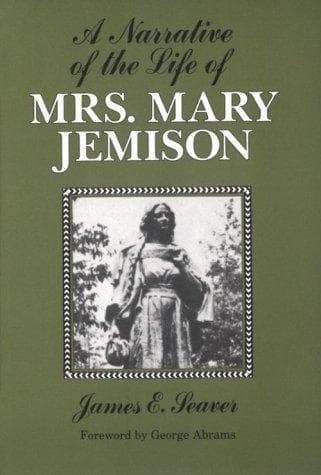
A Narrative of the Life of Mrs. Mary JemisonSeaver, James E. (James Everett)
History
A Narrative of the Life of Mrs. Mary Jemison
Seaver, James E. (James Everett)
Jemison, Mary, 1743-1833; Seneca Indians
The bare loss of liberty is but a mere trifle when compared with the
circumstances that necessarily attend, and are inseparably connected
with it. It is the recollection of what we once were, of the friends,
the home, and the pleasures that we have left or lost; the anticipation
of misery, the appearance of wretchedness, the anxiety for freedom, the
hope of release, the devising of means of escaping, and the vigilance
with which we watch our keepers, that constitute the nauseous dregs of
the bitter cup of slavery. I am sensible, however, that no one can pass
from a state of freedom to that of slavery, and in the last situation
rest perfectly contented; but as every one knows that great exertions
of the mind tend directly to debilitate the body, it will appear obvious
that we ought, when confined, to exert all our faculties to promote our
present comfort, and let future days provide their own sacrifices. In
regard to ourselves, just as we feel, we are.
For the preservation of my life to the present time I am indebted to
an excellent constitution, with which I have been blessed in as great a
degree as any other person. After I arrived to years of understanding,
the care of my own health was one of my principal studies; and by
avoiding exposures to wet and cold, by temperance in eating, abstaining
from the use of spirits, and shunning the excesses to which I was
frequently exposed, I effected my object beyond what I expected. I have
never once been sick till within a year or two, only as I have related.
Spirits and tobacco I have never used, and I have never once attended an
Indian frolic. When I was taken prisoner, and for sometime after that,
spirits was not known; and when it was first introduced, it was in small
quantities, and used only by the Indians; so that it was a long time
before the Indian women begun to even taste it.
After the French war, for a number of years, it was the practice of the
Indians of our tribe to send to Niagara and get two or three kegs of
rum, (in all six or eight gallons,) and hold a frolic as long as it
lasted. When the rum was brought to the town, all the Indians collected,
and before a drop was drank, gave all their knives, tomahawks, guns, and
other instruments of war, to one Indian, whose business it was to bury
them in a private place, keep them concealed, and remain perfectly
sober till the frolic was ended. Having thus divested themselves, they
commenced drinking, and continued their frolic till every drop was
consumed, If any of them became quarrelsome, or got to fighting, those
who were sober enough bound them upon the ground, where they were
obliged to lie till they got sober, and then were unbound. When the
fumes of the spirits had left the company, the sober Indian returned
to each the instruments with which they had entrusted him, and all went
home satisfied. A frolic of that kind was held but once a year, and
that at the time the Indians quit their hunting, and come in with their
deer-skins.
Public-domain text, read in full here on John Shaqi.
Reviews
Reviews
No reviews yet
Be the first to share your thoughts on this work.
Elsewhere in the archive
Join the Discussion
Join the discussion
Sign in to leave a comment or review.
Sign InorCreate an account