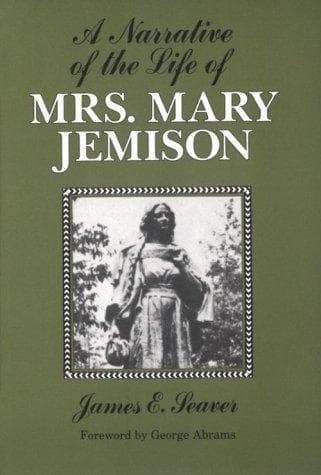
A Narrative of the Life of Mrs. Mary JemisonSeaver, James E. (James Everett)
History
A Narrative of the Life of Mrs. Mary Jemison
Seaver, James E. (James Everett)
Jemison, Mary, 1743-1833; Seneca Indians
In those frolics the women never participated. Soon after the
revolutionary war, however, spirits became common in our tribe, and
has been used indiscriminately by both sexes; though there are not so
frequent instances of intoxication amongst the squaws as amongst the
Indians.
To the introduction and use or that baneful article, which has made such
devastation in our tribes, and threatens the extinction of our people,
(the Indians,) I can with the greatest propriety impute the whole of my
misfortune in losing my three sons. But as I have before observed, not
even the love of life will restrain an Indian from sipping the poison
that he knows will destroy him. The voice of nature, the rebukes of
reason, the advice of parents, the expostulations of friends, and the
numerous instances of sudden death, are all insufficient to reclaim
an Indian, who has once experienced the exhilarating and inebriating
effects of spirits, from seeking his grave in the bottom of his bottle!
My strength has been great for a woman of my size, otherwise I must long
ago have died under the burdens which I was obliged to carry. I learned
to carry loads on my back, in a strap placed across my forehead, soon
after my captivity; and continue to carry in the same way. Upwards of
thirty years ago, with the help of my young children, I backed all the
boards that were used about my house from Allen's mill at the outlet
of Silver Lake, a distance of five miles. I have planted, hoed, and
harvested corn every season but one since I was taken prisoner. Even
this present fall (1823) I have husked my corn and backed it into the
house.
The first cow that I ever owned, I bought of a squaw sometime after the
revolution. It had been stolen from the enemy. I had owned it but a few
days when it fell into a hole, and almost died before we could get it
out. After this, the squaw wanted to be recanted, but as I would not
give up the cow, I gave her money enough to make, when added to the sum
which I paid her at first, thirty-five dollars. Cows were plenty on the
Ohio, when I lived there, and of good quality.
For provisions I have never suffered since I came upon the flats; nor
have I ever been in debt to any other hands than my own for the plenty
that I have shared.
My vices, that have been suspected, have been but few. It was believed
for a long time, by some of our people, that I was a great witch; but
they were unable to prove my guilt, and consequently I escaped the
certain doom of those who are convicted of that crime, which, by
Indians, is considered as heinous as murder. Some of my children had
light brown hair, and tolerable fair skin, which used to make some say
that I stole them; yet as I was ever conscious of my own constancy,
I never thought that any one really believed that I was guilty of
adultery.
Public-domain text, read in full here on John Shaqi.
Reviews
Reviews
No reviews yet
Be the first to share your thoughts on this work.
Elsewhere in the archive
Join the Discussion
Join the discussion
Sign in to leave a comment or review.
Sign InorCreate an account