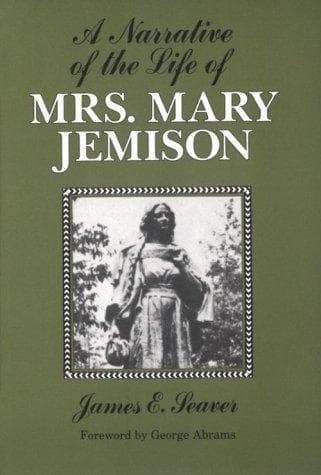
A Narrative of the Life of Mrs. Mary JemisonSeaver, James E. (James Everett)
History
A Narrative of the Life of Mrs. Mary Jemison
Seaver, James E. (James Everett)
Jemison, Mary, 1743-1833; Seneca Indians
Many years have elapsed since the introduction of Christian Missionaries
among them, whom they have heard, and very generally understand the
purport of the message they were sent to deliver. They say that it is
highly probable that Jesus Christ came into the world in old times,
to establish a religion that would promote the happiness of the white
people, on the other side of the great water, (meaning the sea,) and
that he died for the sins of his people, as the missionaries have
informed them: But, they say that Jesus Christ had nothing to do
with them, and that the Christian religion was not designed for their
benefit; but rather, should they embrace it, they are confident it would
make them worse, and consequently do them an injury. They say, also,
that the Great Good Spirit gave them their religion; and that it is
better adapted to their circumstances, situation and habits, and to
the promotion of their present comfort and ultimate happiness, than any
system that ever has or can be devised. They, however, believe, that
the Christian religion is better calculated for the good of white people
than theirs is; and wonder that those who have embraced it, do not
attend more strictly to its precepts, and feel more engaged for its
support and diffusion among themselves. At the present time, they are
opposed to preachers or schoolmasters being sent or coming among them;
and appear determined by all means to adhere to their ancient customs.
They believe in a Great Good Spirit, (whom they call in the Seneca
language Nau-wan-e-u,) as the Creator of the world, and of every good
thing--that he made men, and all inoffensive animals; that he supplies
men with all the comforts of life; and that he is particularly partial
to the Indians, whom they say are his peculiar people. They also believe
that he is pleased in giving them (the Indians) good gifts; and that he
is highly gratified with their good conduct--that he abhors their vices,
and that he is willing to punish them for their bad conduct, not only
in this world, but in a future state of existence. His residence,
they suppose, lies at a great distance from them, in a country that is
perfectly pleasant, where plenty abounds, even to profusion. That there
the soil is completely fertile, and the seasons so mild that the corn
never fails to be good--that the deer, elk, buffalo, turkies, and other
useful animals, are numerous, and that the forests are well calculated
to facilitate their hunting them with success--that the streams are
pure, and abound with fish: and that nothing is wanting, to render
fruition complete. Over this territory they say Nauwaneu presides as an
all-powerful king; and that without counsel he admits to his pleasures
all whom he considers to be worthy of enjoying so great a state of
blessedness.
To this being they address prayers, offer sacrifices, give thanks for
favors, and perform many acts of devotion and reverence.
Public-domain text, read in full here on John Shaqi.
Reviews
Reviews
No reviews yet
Be the first to share your thoughts on this work.
Elsewhere in the archive
Join the Discussion
Join the discussion
Sign in to leave a comment or review.
Sign InorCreate an account