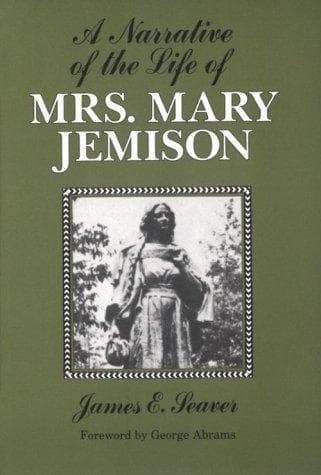
A Narrative of the Life of Mrs. Mary JemisonSeaver, James E. (James Everett)
History
A Narrative of the Life of Mrs. Mary Jemison
Seaver, James E. (James Everett)
Jemison, Mary, 1743-1833; Seneca Indians
They likewise believe that Nauwaneu has a brother that is less powerful
than himself, and who is opposed to him, and to every one that is or
wishes to be good: that this bad Spirit made all evil things, snakes,
wolves, catamounts, and all other poisonous or noxious animals and
beasts of prey, except the bear, which, on the account of the excellence
of its meat for food, and skin for clothing, they say was made by
Nauwaneu. Besides all this they say he makes and sends them their
diseases, bad weather and bad crops, and that he makes and supports
witches. He owns a large country adjoining that of his brother, with
whom he is continually at variance. His fields are unproductive; thick
clouds intercept the rays of the sun, and consequently destructive
frosts are frequent; game is very scarce, and not easily taken; ravenous
beasts are numerous; reptiles of every poisoned tooth lie in the path
of the traveller; streams are muddy, and hunger, nakedness and general
misery, are severely felt by those who unfortunately become his tenants.
He takes pleasure in afflicting the Indians here, and after their death
receives all those into his dreary dominions, who in their life time
have been so vile as to be rejected by Nauwaneu, under whose eye they
are continued in an uncomfortable state forever. To this source of
evil they offer some oblations to abate his vengeance, and render
him propitious. They, however, believe him to be, in a degree, under
subjection to his brother, and incapable of executing his plans only by
his high permission.
Public religious duties are attended to in the celebration of particular
festivals and sacrifices, which are observed with circumspection and
attended with decorum.
In each year they have five feasts, or stated times for assembling in
their tribes, and giving thanks to Nauwaneu, for the blessings which
they have received from his kind and liberal and provident hand; and
also to converse upon the best means of meriting a continuance of
his favors. The first of these feasts is immediately after they have
finished sugaring, at which time they give thanks for the favorable
weather and great quantity of sap they have had, and for the sugar that
they have been allowed to make for the benefit of their families. At
this, as at all the succeeding feasts, the Chiefs arise singly, and
address the audience in a kind of exhortation, in which they express
their own thankfulness, urge the necessity and propriety of general
gratitude, and point out the course which ought to be pursued by each
individual, in order that Nauwaneu may continue to bless them, and that
the evil spirit may be defeated.
Public-domain text, read in full here on John Shaqi.
Reviews
Reviews
No reviews yet
Be the first to share your thoughts on this work.
Elsewhere in the archive
Join the Discussion
Join the discussion
Sign in to leave a comment or review.
Sign InorCreate an account