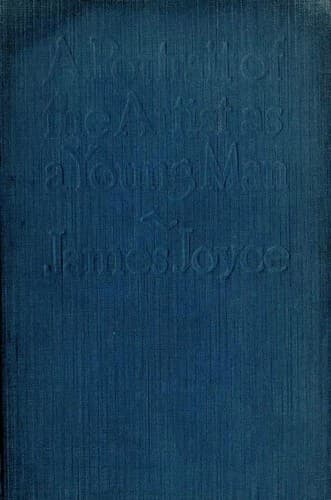
A Portrait of the Artist as a Young ManJoyce, James
General
A Portrait of the Artist as a Young Man
Joyce, James
Artists -- Fiction; Autobiographical fiction; Bildungsromans; Dublin (Ireland) -- Fiction; Young men -- Fiction
The director stood in the embrasure of the window, his back to the
light, leaning an elbow on the brown crossblind, and, as he spoke and
smiled, slowly dangling and looping the cord of the other blind,
Stephen stood before him, following for a moment with his eyes the
waning of the long summer daylight above the roofs or the slow deft
movements of the priestly fingers. The priest’s face was in total
shadow, but the waning daylight from behind him touched the deeply
grooved temples and the curves of the skull. Stephen followed also with
his ears the accents and intervals of the priest’s voice as he spoke
gravely and cordially of indifferent themes, the vacation which had
just ended, the colleges of the order abroad, the transference of
masters. The grave and cordial voice went on easily with its tale and
in the pauses Stephen felt bound to set it on again with respectful
questions. He knew that the tale was a prelude and his mind waited for
the sequel. Ever since the message of summons had come for him from the
director his mind had struggled to find the meaning of the message;
and, during the long restless time he had sat in the college parlour
waiting for the director to come in, his eyes had wandered from one
sober picture to another around the walls and his mind wandered from
one guess to another until the meaning of the summons had almost become
clear. Then, just as he was wishing that some unforeseen cause might
prevent the director from coming, he had heard the handle of the door
turning and the swish of a soutane.
The director had begun to speak of the Dominican and Franciscan orders
and of the friendship between saint Thomas and saint Bonaventure. The
Capuchin dress, he thought, was rather too....
Stephen’s face gave back the priest’s indulgent smile and, not being
anxious to give an opinion, he made a slight dubitative movement with
his lips.
—I believe, continued the director, that there is some talk now among
the Capuchins themselves of doing away with it and following the
example of the other Franciscans.
—I suppose they would retain it in the cloisters? said Stephen.
—O certainly, said the director. For the cloister it is all right but
for the street I really think it would be better to do away with it,
don’t you?
—It must be troublesome, I imagine.
—Of course it is, of course. Just imagine when I was in Belgium I used
to see them out cycling in all kinds of weather with this thing up
about their knees! It was really ridiculous. _Les jupes_, they call
them in Belgium.
The vowel was so modified as to be indistinct.
—What do they call them?
—_Les jupes_.
—O!
Stephen smiled again in answer to the smile which he could not see on
the priest’s shadowed face, its image or spectre only passing rapidly
across his mind as the low discreet accent fell upon his ear. He gazed
calmly before him at the waning sky, glad of the cool of the evening
and of the faint yellow glow which hid the tiny flame kindling upon his
cheek.
Public-domain text, read in full here on John Shaqi.
Reviews
Reviews
No reviews yet
Be the first to share your thoughts on this work.
Elsewhere in the archive
Join the Discussion
Join the discussion
Sign in to leave a comment or review.
Sign InorCreate an account