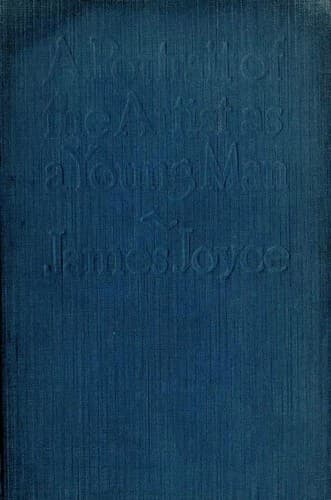
A Portrait of the Artist as a Young ManJoyce, James
General
A Portrait of the Artist as a Young Man
Joyce, James
Artists -- Fiction; Autobiographical fiction; Bildungsromans; Dublin (Ireland) -- Fiction; Young men -- Fiction
As he descended the steps the impression which effaced his troubled
selfcommunion was that of a mirthless mask reflecting a sunken day from
the threshold of the college. The shadow, then, of the life of the
college passed gravely over his consciousness. It was a grave and
ordered and passionless life that awaited him, a life without material
cares. He wondered how he would pass the first night in the novitiate
and with what dismay he would wake the first morning in the dormitory.
The troubling odour of the long corridors of Clongowes came back to him
and he heard the discreet murmur of the burning gasflames. At once from
every part of his being unrest began to irradiate. A feverish
quickening of his pulses followed, and a din of meaningless words drove
his reasoned thoughts hither and thither confusedly. His lungs dilated
and sank as if he were inhaling a warm moist unsustaining air and he
smelt again the moist warm air which hung in the bath in Clongowes
above the sluggish turfcoloured water.
Some instinct, waking at these memories, stronger than education or
piety, quickened within him at every near approach to that life, an
instinct subtle and hostile, and armed him against acquiescence. The
chill and order of the life repelled him. He saw himself rising in the
cold of the morning and filing down with the others to early mass and
trying vainly to struggle with his prayers against the fainting
sickness of his stomach. He saw himself sitting at dinner with the
community of a college. What, then, had become of that deeprooted
shyness of his which had made him loth to eat or drink under a strange
roof? What had come of the pride of his spirit which had always made
him conceive himself as a being apart in every order?
The Reverend Stephen Dedalus, S. J.
His name in that new life leaped into characters before his eyes and to
it there followed a mental sensation of an undefined face or colour of
a face. The colour faded and became strong like a changing glow of
pallid brick red. Was it the raw reddish glow he had so often seen on
wintry mornings on the shaven gills of the priests? The face was
eyeless and sourfavoured and devout, shot with pink tinges of
suffocated anger. Was it not a mental spectre of the face of one of the
jesuits whom some of the boys called Lantern Jaws and others Foxy
Campbell?
Public-domain text, read in full here on John Shaqi.
Reviews
Reviews
No reviews yet
Be the first to share your thoughts on this work.
Elsewhere in the archive
Join the Discussion
Join the discussion
Sign in to leave a comment or review.
Sign InorCreate an account