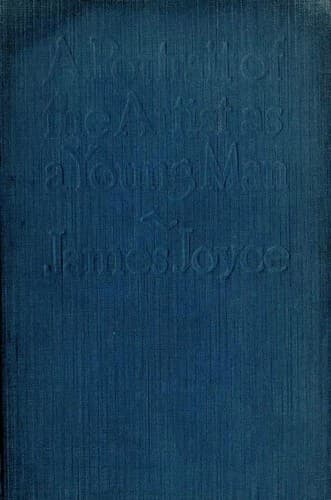
A Portrait of the Artist as a Young ManJoyce, James
General
A Portrait of the Artist as a Young Man
Joyce, James
Artists -- Fiction; Autobiographical fiction; Bildungsromans; Dublin (Ireland) -- Fiction; Young men -- Fiction
As he came back to the hearth, limping slightly but with a brisk step,
Stephen saw the silent soul of a jesuit look out at him from the pale
loveless eyes. Like Ignatius he was lame but in his eyes burned no
spark of Ignatius’ enthusiasm. Even the legendary craft of the company,
a craft subtler and more secret than its fabled books of secret subtle
wisdom, had not fired his soul with the energy of apostleship. It
seemed as if he used the shifts and lore and cunning of the world, as
bidden to do, for the greater glory of God, without joy in their
handling or hatred of that in them which was evil but turning them,
with a firm gesture of obedience back upon themselves and for all this
silent service it seemed as if he loved not at all the master and
little, if at all, the ends he served. _Similiter atque senis baculus_,
he was, as the founder would have had him, like a staff in an old man’s
hand, to be leaned on in the road at nightfall or in stress of weather,
to lie with a lady’s nosegay on a garden seat, to be raised in menace.
The dean returned to the hearth and began to stroke his chin.
—When may we expect to have something from you on the esthetic
question? he asked.
—From me! said Stephen in astonishment. I stumble on an idea once a
fortnight if I am lucky.
—These questions are very profound, Mr Dedalus, said the dean. It is
like looking down from the cliffs of Moher into the depths. Many go
down into the depths and never come up. Only the trained diver can go
down into those depths and explore them and come to the surface again.
—If you mean speculation, sir, said Stephen, I also am sure that there
is no such thing as free thinking inasmuch as all thinking must be
bound by its own laws.
—Ha!
—For my purpose I can work on at present by the light of one or two
ideas of Aristotle and Aquinas.
—I see. I quite see your point.
—I need them only for my own use and guidance until I have done
something for myself by their light. If the lamp smokes or smells I
shall try to trim it. If it does not give light enough I shall sell it
and buy another.
—Epictetus also had a lamp, said the dean, which was sold for a fancy
price after his death. It was the lamp he wrote his philosophical
dissertations by. You know Epictetus?
—An old gentleman, said Stephen coarsely, who said that the soul is
very like a bucketful of water.
—He tells us in his homely way, the dean went on, that he put an iron
lamp before a statue of one of the gods and that a thief stole the
lamp. What did the philosopher do? He reflected that it was in the
character of a thief to steal and determined to buy an earthen lamp
next day instead of the iron lamp.
Public-domain text, read in full here on John Shaqi.
Reviews
Reviews
No reviews yet
Be the first to share your thoughts on this work.
Elsewhere in the archive
Join the Discussion
Join the discussion
Sign in to leave a comment or review.
Sign InorCreate an account