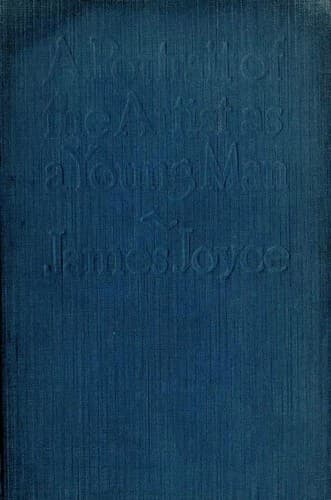
A Portrait of the Artist as a Young ManJoyce, James
General
A Portrait of the Artist as a Young Man
Joyce, James
Artists -- Fiction; Autobiographical fiction; Bildungsromans; Dublin (Ireland) -- Fiction; Young men -- Fiction
He opened the door of the theatre and halted in the chilly grey light
that struggled through the dusty windows. A figure was crouching before
the large grate and by its leanness and greyness he knew that it was
the dean of studies lighting the fire. Stephen closed the door quietly
and approached the fireplace.
—Good morning, sir! Can I help you?
The priest looked up quickly and said:
—One moment now, Mr Dedalus, and you will see. There is an art in
lighting a fire. We have the liberal arts and we have the useful arts.
This is one of the useful arts.
—I will try to learn it, said Stephen.
—Not too much coal, said the dean, working briskly at his task, that is
one of the secrets.
He produced four candle-butts from the sidepockets of his soutane and
placed them deftly among the coals and twisted papers. Stephen watched
him in silence. Kneeling thus on the flagstone to kindle the fire and
busied with the disposition of his wisps of paper and candle-butts he
seemed more than ever a humble server making ready the place of
sacrifice in an empty temple, a levite of the Lord. Like a levite’s
robe of plain linen the faded worn soutane draped the kneeling figure
of one whom the canonicals or the bellbordered ephod would irk and
trouble. His very body had waxed old in lowly service of the Lord—in
tending the fire upon the altar, in bearing tidings secretly, in
waiting upon worldlings, in striking swiftly when bidden—and yet had
remained ungraced by aught of saintly or of prelatic beauty. Nay, his
very soul had waxed old in that service without growing towards light
and beauty or spreading abroad a sweet odour of her sanctity—a
mortified will no more responsive to the thrill of its obedience than
was to the thrill of love or combat his ageing body, spare and sinewy,
greyed with a silver-pointed down.
The dean rested back on his hunkers and watched the sticks catch.
Stephen, to fill the silence, said:
—I am sure I could not light a fire.
—You are an artist, are you not, Mr Dedalus? said the dean, glancing up
and blinking his pale eyes. The object of the artist is the creation of
the beautiful. What the beautiful is is another question.
He rubbed his hands slowly and drily over the difficulty.
—Can you solve that question now? he asked.
—Aquinas, answered Stephen, says _pulcra sunt quæ visa placent_.
—This fire before us, said the dean, will be pleasing to the eye. Will
it therefore be beautiful?
—In so far as it is apprehended by the sight, which I suppose means
here esthetic intellection, it will be beautiful. But Aquinas also says
_Bonum est in quod tendit appetitus_. In so far as it satisfies the
animal craving for warmth fire is a good. In hell, however, it is an
evil.
—Quite so, said the dean, you have certainly hit the nail on the head.
He rose nimbly and went towards the door, set it ajar and said:
—A draught is said to be a help in these matters.
Public-domain text, read in full here on John Shaqi.
Reviews
Reviews
No reviews yet
Be the first to share your thoughts on this work.
Elsewhere in the archive
Join the Discussion
Join the discussion
Sign in to leave a comment or review.
Sign InorCreate an account