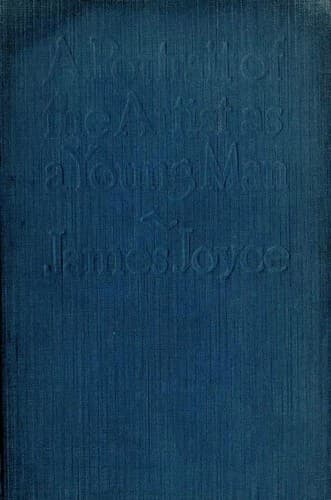
A Portrait of the Artist as a Young ManJoyce, James
General
A Portrait of the Artist as a Young Man
Joyce, James
Artists -- Fiction; Autobiographical fiction; Bildungsromans; Dublin (Ireland) -- Fiction; Young men -- Fiction
The rain fell faster. When they passed through the passage beside
Kildare house they found many students sheltering under the arcade of
the library. Cranly, leaning against a pillar, was picking his teeth
with a sharpened match, listening to some companions. Some girls stood
near the entrance door. Lynch whispered to Stephen:
—Your beloved is here.
Stephen took his place silently on the step below the group of
students, heedless of the rain which fell fast, turning his eyes
towards her from time to time. She too stood silently among her
companions. She has no priest to flirt with, he thought with conscious
bitterness, remembering how he had seen her last. Lynch was right. His
mind emptied of theory and courage, lapsed back into a listless peace.
He heard the students talking among themselves. They spoke of two
friends who had passed the final medical examination, of the chances of
getting places on ocean liners, of poor and rich practices.
—That’s all a bubble. An Irish country practice is better.
—Hynes was two years in Liverpool and he says the same. A frightful
hole he said it was. Nothing but midwifery cases.
—Do you mean to say it is better to have a job here in the country than
in a rich city like that? I know a fellow...
—Hynes has no brains. He got through by stewing, pure stewing.
—Don’t mind him. There’s plenty of money to be made in a big commercial
city.
—Depends on the practice.
—_Ego credo ut vita pauperum est simpliciter atrox, simpliciter
sanguinarius atrox, in Liverpoolio._
Their voices reached his ears as if from a distance in interrupted
pulsation. She was preparing to go away with her companions.
The quick light shower had drawn off, tarrying in clusters of diamonds
among the shrubs of the quadrangle where an exhalation was breathed
forth by the blackened earth. Their trim boots prattled as they stood
on the steps of the colonnade, talking quietly and gaily, glancing at
the clouds, holding their umbrellas at cunning angles against the few
last raindrops, closing them again, holding their skirts demurely.
And if he had judged her harshly? If her life were a simple rosary of
hours, her life simple and strange as a bird’s life, gay in the
morning, restless all day, tired at sundown? Her heart simple and
wilful as a bird’s heart?
Towards dawn he awoke. O what sweet music! His soul was all dewy wet.
Over his limbs in sleep pale cool waves of light had passed. He lay
still, as if his soul lay amid cool waters, conscious of faint sweet
music. His mind was waking slowly to a tremulous morning knowledge, a
morning inspiration. A spirit filled him, pure as the purest water,
sweet as dew, moving as music. But how faintly it was inbreathed, how
passionlessly, as if the seraphim themselves were breathing upon him!
His soul was waking slowly, fearing to awake wholly. It was that
windless hour of dawn when madness wakes and strange plants open to the
light and the moth flies forth silently.
Public-domain text, read in full here on John Shaqi.
Reviews
Reviews
No reviews yet
Be the first to share your thoughts on this work.
Elsewhere in the archive
Join the Discussion
Join the discussion
Sign in to leave a comment or review.
Sign InorCreate an account