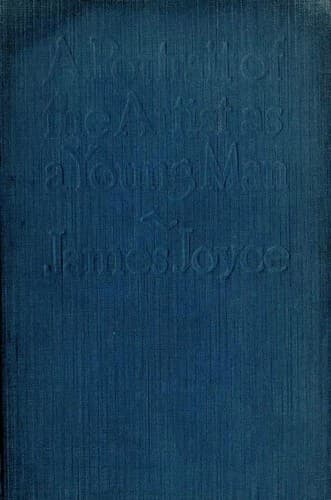
A Portrait of the Artist as a Young ManJoyce, James
General
A Portrait of the Artist as a Young Man
Joyce, James
Artists -- Fiction; Autobiographical fiction; Bildungsromans; Dublin (Ireland) -- Fiction; Young men -- Fiction
He spoke the verses aloud from the first lines till the music and
rhythm suffused his mind, turning it to quiet indulgence; then copied
them painfully to feel them the better by seeing them; then lay back on
his bolster.
The full morning light had come. No sound was to be heard; but he knew
that all around him life was about to awaken in common noises, hoarse
voices, sleepy prayers. Shrinking from that life he turned towards the
wall, making a cowl of the blanket and staring at the great overblown
scarlet flowers of the tattered wallpaper. He tried to warm his
perishing joy in their scarlet glow, imagining a roseway from where he
lay upwards to heaven all strewn with scarlet flowers. Weary! Weary! He
too was weary of ardent ways.
A gradual warmth, a languorous weariness passed over him descending
along his spine from his closely cowled head. He felt it descend and,
seeing himself as he lay, smiled. Soon he would sleep.
He had written verses for her again after ten years. Ten years before
she had worn her shawl cowlwise about her head, sending sprays of her
warm breath into the night air, tapping her foot upon the glassy road.
It was the last tram; the lank brown horses knew it and shook their
bells to the clear night in admonition. The conductor talked with the
driver, both nodding often in the green light of the lamp. They stood
on the steps of the tram, he on the upper, she on the lower. She came
up to his step many times between their phrases and went down again and
once or twice remained beside him forgetting to go down and then went
down. Let be! Let be!
Ten years from that wisdom of children to his folly. If he sent her the
verses? They would be read out at breakfast amid the tapping of
eggshells. Folly indeed! Her brothers would laugh and try to wrest the
page from each other with their strong hard fingers. The suave priest,
her uncle, seated in his armchair, would hold the page at arm’s length,
read it smiling and approve of the literary form.
No, no; that was folly. Even if he sent her the verses she would not
show them to others. No, no; she could not.
He began to feel that he had wronged her. A sense of her innocence
moved him almost to pity her, an innocence he had never understood till
he had come to the knowledge of it through sin, an innocence which she
too had not understood while she was innocent or before the strange
humiliation of her nature had first come upon her. Then first her soul
had begun to live as his soul had when he had first sinned, and a
tender compassion filled his heart as he remembered her frail pallor
and her eyes, humbled and saddened by the dark shame of womanhood.
While his soul had passed from ecstasy to languor where had she been?
Might it be, in the mysterious ways of spiritual life, that her soul at
those same moments had been conscious of his homage? It might be.
Public-domain text, read in full here on John Shaqi.
Reviews
Reviews
No reviews yet
Be the first to share your thoughts on this work.
Elsewhere in the archive
Join the Discussion
Join the discussion
Sign in to leave a comment or review.
Sign InorCreate an account