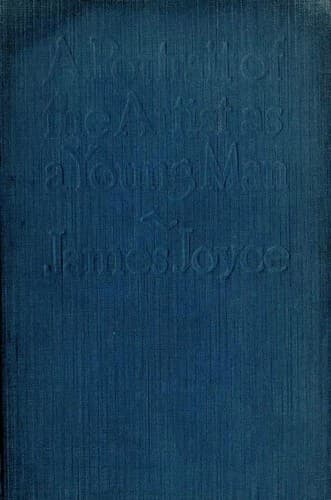
A Portrait of the Artist as a Young ManJoyce, James
General
A Portrait of the Artist as a Young Man
Joyce, James
Artists -- Fiction; Autobiographical fiction; Bildungsromans; Dublin (Ireland) -- Fiction; Young men -- Fiction
Glynn coughed and said gently, holding back with difficulty the nervous
titter in his voice and moving his umbrella at every word:
—And, as you remark, if it is thus, I ask emphatically whence comes
this thusness.
—Because the church is cruel like all old sinners, Temple said.
—Are you quite orthodox on that point, Temple? Dixon said suavely.
—Saint Augustine says that about unbaptised children going to hell,
Temple answered, because he was a cruel old sinner too.
—I bow to you, Dixon said, but I had the impression that limbo existed
for such cases.
—Don’t argue with him, Dixon, Cranly said brutally. Don’t talk to him
or look at him. Lead him home with a sugan the way you’d lead a
bleating goat.
—Limbo! Temple cried. That’s a fine invention too. Like hell.
—But with the unpleasantness left out, Dixon said.
He turned smiling to the others and said:
—I think I am voicing the opinions of all present in saying so much.
—You are, Glynn said in a firm tone. On that point Ireland is united.
He struck the ferrule of his umbrella on the stone floor of the
colonnade.
—Hell, Temple said. I can respect that invention of the grey spouse of
Satan. Hell is Roman, like the walls of the Romans, strong and ugly.
But what is limbo?
—Put him back into the perambulator, Cranly, O’Keeffe called out.
Cranly made a swift step towards Temple, halted, stamping his foot,
crying as if to a fowl:
—Hoosh!
Temple moved away nimbly.
—Do you know what limbo is? he cried. Do you know what we call a notion
like that in Roscommon?
—Hoosh! Blast you! Cranly cried, clapping his hands.
—Neither my arse nor my elbow! Temple cried out scornfully. And that’s
what I call limbo.
—Give us that stick here, Cranly said.
He snatched the ashplant roughly from Stephen’s hand and sprang down
the steps: but Temple, hearing him move in pursuit, fled through the
dusk like a wild creature, nimble and fleet-footed. Cranly’s heavy
boots were heard loudly charging across the quadrangle and then
returning heavily, foiled and spurning the gravel at each step.
His step was angry and with an angry abrupt gesture he thrust the stick
back into Stephen’s hand. Stephen felt that his anger had another cause
but, feigning patience, touched his arm slightly and said quietly:
—Cranly, I told you I wanted to speak to you. Come away.
Cranly looked at him for a few moments and asked:
—Now?
—Yes, now, Stephen said. We can’t speak here. Come away.
They crossed the quadrangle together without speaking. The bird call
from _Siegfried_ whistled softly followed them from the steps of the
porch. Cranly turned, and Dixon, who had whistled, called out:
—Where are you fellows off to? What about that game, Cranly?
Public-domain text, read in full here on John Shaqi.
Reviews
Reviews
No reviews yet
Be the first to share your thoughts on this work.
Elsewhere in the archive
Join the Discussion
Join the discussion
Sign in to leave a comment or review.
Sign InorCreate an account