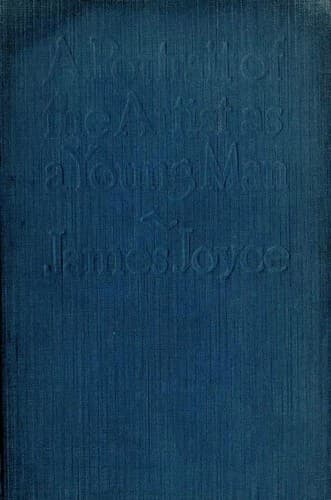
A Portrait of the Artist as a Young ManJoyce, James
General
A Portrait of the Artist as a Young Man
Joyce, James
Artists -- Fiction; Autobiographical fiction; Bildungsromans; Dublin (Ireland) -- Fiction; Young men -- Fiction
They parleyed in shouts across the still air about a game of billiards
to be played in the Adelphi hotel. Stephen walked on alone and out into
the quiet of Kildare Street opposite Maple’s hotel he stood to wait,
patient again. The name of the hotel, a colourless polished wood, and
its colourless front stung him like a glance of polite disdain. He
stared angrily back at the softly lit drawingroom of the hotel in which
he imagined the sleek lives of the patricians of Ireland housed in
calm. They thought of army commissions and land agents: peasants
greeted them along the roads in the country; they knew the names of
certain French dishes and gave orders to jarvies in highpitched
provincial voices which pierced through their skintight accents.
How could he hit their conscience or how cast his shadow over the
imaginations of their daughters, before their squires begat upon them,
that they might breed a race less ignoble than their own? And under the
deepened dusk he felt the thoughts and desires of the race to which he
belonged flitting like bats across the dark country lanes, under trees
by the edges of streams and near the pool-mottled bogs. A woman had
waited in the doorway as Davin had passed by at night and, offering him
a cup of milk, had all but wooed him to her bed; for Davin had the mild
eyes of one who could be secret. But him no woman’s eyes had wooed.
His arm was taken in a strong grip and Cranly’s voice said:
—Let us eke go.
They walked southward in silence. Then Cranly said:
—That blithering idiot, Temple! I swear to Moses, do you know, that
I’ll be the death of that fellow one time.
But his voice was no longer angry and Stephen wondered was he thinking
of her greeting to him under the porch.
They turned to the left and walked on as before. When they had gone on
so for some time Stephen said:
—Cranly, I had an unpleasant quarrel this evening.
—With your people? Cranly asked.
—With my mother.
—About religion?
—Yes, Stephen answered.
After a pause Cranly asked:
—What age is your mother?
—Not old, Stephen said. She wishes me to make my easter duty.
—And will you?
—I will not, Stephen said.
—Why not? Cranly said.
—I will not serve, answered Stephen.
—That remark was made before, Cranly said calmly.
—It is made behind now, said Stephen hotly.
Cranly pressed Stephen’s arm, saying:
—Go easy, my dear man. You’re an excitable bloody man, do you know.
He laughed nervously as he spoke and, looking up into Stephen’s face
with moved and friendly eyes, said:
—Do you know that you are an excitable man?
—I daresay I am, said Stephen, laughing also.
Their minds, lately estranged, seemed suddenly to have been drawn
closer, one to the other.
—Do you believe in the eucharist? Cranly asked.
—I do not, Stephen said.
—Do you disbelieve then?
—I neither believe in it nor disbelieve in it, Stephen answered.
Public-domain text, read in full here on John Shaqi.
Reviews
Reviews
No reviews yet
Be the first to share your thoughts on this work.
Elsewhere in the archive
Join the Discussion
Join the discussion
Sign in to leave a comment or review.
Sign InorCreate an account