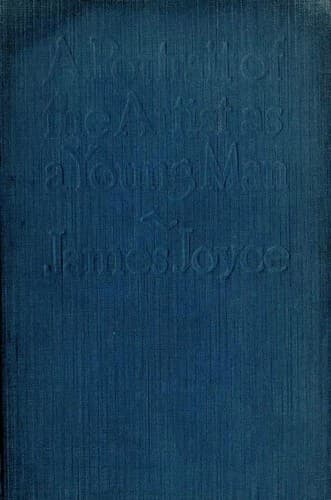
A Portrait of the Artist as a Young ManJoyce, James
General
A Portrait of the Artist as a Young Man
Joyce, James
Artists -- Fiction; Autobiographical fiction; Bildungsromans; Dublin (Ireland) -- Fiction; Young men -- Fiction
The soft beauty of the Latin word touched with an enchanting touch the
dark of the evening, with a touch fainter and more persuading than the
touch of music or of a woman’s hand. The strife of their minds was
quelled. The figure of a woman as she appears in the liturgy of the
church passed silently through the darkness: a white-robed figure,
small and slender as a boy, and with a falling girdle. Her voice, frail
and high as a boy’s, was heard intoning from a distant choir the first
words of a woman which pierce the gloom and clamour of the first
chanting of the passion:
—_Et tu cum Jesu Galilæo eras._
And all hearts were touched and turned to her voice, shining like a
young star, shining clearer as the voice intoned the proparoxyton and
more faintly as the cadence died.
The singing ceased. They went on together, Cranly repeating in strongly
stressed rhythm the end of the refrain:
And when we are married,
O, how happy we’ll be
For I love sweet Rosie O’Grady
And Rosie O’Grady loves me.
—There’s real poetry for you, he said. There’s real love.
He glanced sideways at Stephen with a strange smile and said:
—Do you consider that poetry? Or do you know what the words mean?
—I want to see Rosie first, said Stephen.
—She’s easy to find, Cranly said.
His hat had come down on his forehead. He shoved it back and in the
shadow of the trees Stephen saw his pale face, framed by the dark, and
his large dark eyes. Yes. His face was handsome and his body was strong
and hard. He had spoken of a mother’s love. He felt then the sufferings
of women, the weaknesses of their bodies and souls: and would shield
them with a strong and resolute arm and bow his mind to them.
Away then: it is time to go. A voice spoke softly to Stephen’s lonely
heart, bidding him go and telling him that his friendship was coming to
an end. Yes; he would go. He could not strive against another. He knew
his part.
—Probably I shall go away, he said.
—Where? Cranly asked.
—Where I can, Stephen said.
—Yes, Cranly said. It might be difficult for you to live here now. But
is it that makes you go?
—I have to go, Stephen answered.
—Because, Cranly continued, you need not look upon yourself as driven
away if you do not wish to go or as a heretic or an outlaw. There are
many good believers who think as you do. Would that surprise you? The
church is not the stone building nor even the clergy and their dogmas.
It is the whole mass of those born into it. I don’t know what you wish
to do in life. Is it what you told me the night we were standing
outside Harcourt Street station?
—Yes, Stephen said, smiling in spite of himself at Cranly’s way of
remembering thoughts in connexion with places. The night you spent half
an hour wrangling with Doherty about the shortest way from Sallygap to
Larras.
Public-domain text, read in full here on John Shaqi.
Reviews
Reviews
No reviews yet
Be the first to share your thoughts on this work.
Elsewhere in the archive
Join the Discussion
Join the discussion
Sign in to leave a comment or review.
Sign InorCreate an account