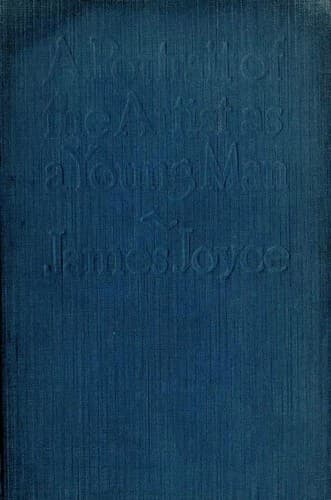
A Portrait of the Artist as a Young ManJoyce, James
General
A Portrait of the Artist as a Young Man
Joyce, James
Artists -- Fiction; Autobiographical fiction; Bildungsromans; Dublin (Ireland) -- Fiction; Young men -- Fiction
—Pothead! Cranly said with calm contempt. What does he know about the
way from Sallygap to Larras? Or what does he know about anything for
that matter? And the big slobbering washingpot head of him!
He broke into a loud long laugh.
—Well? Stephen said. Do you remember the rest?
—What you said, is it? Cranly asked. Yes, I remember it. To discover
the mode of life or of art whereby your spirit could express itself in
unfettered freedom.
Stephen raised his hat in acknowledgement.
—Freedom! Cranly repeated. But you are not free enough yet to commit a
sacrilege. Tell me would you rob?
—I would beg first, Stephen said.
—And if you got nothing, would you rob?
—You wish me to say, Stephen answered, that the rights of property are
provisional, and that in certain circumstances it is not unlawful to
rob. Everyone would act in that belief. So I will not make you that
answer. Apply to the jesuit theologian Juan Mariana de Talavera who
will also explain to you in what circumstances you may lawfully kill
your king and whether you had better hand him his poison in a goblet or
smear it for him upon his robe or his saddlebow. Ask me rather would I
suffer others to rob me or, if they did, would I call down upon them
what I believe is called the chastisement of the secular arm?
—And would you?
—I think, Stephen said, it would pain me as much to do so as to be
robbed.
—I see, Cranly said.
He produced his match and began to clean the crevice between two teeth.
Then he said carelessly:
—Tell me, for example, would you deflower a virgin?
—Excuse me, Stephen said politely, is that not the ambition of most
young gentlemen?
—What then is your point of view? Cranly asked.
His last phrase, sour smelling as the smoke of charcoal and
disheartening, excited Stephen’s brain, over which its fumes seemed to
brood.
—Look here, Cranly, he said. You have asked me what I would do and what
I would not do. I will tell you what I will do and what I will not do.
I will not serve that in which I no longer believe, whether it call
itself my home, my fatherland, or my church: and I will try to express
myself in some mode of life or art as freely as I can and as wholly as
I can, using for my defence the only arms I allow myself to
use—silence, exile and cunning.
Cranly seized his arm and steered him round so as to lead him back
towards Leeson Park. He laughed almost slily and pressed Stephen’s arm
with an elder’s affection.
—Cunning indeed! he said. Is it you? You poor poet, you!
—And you made me confess to you, Stephen said, thrilled by his touch,
as I have confessed to you so many other things, have I not?
—Yes, my child, Cranly said, still gaily.
—You made me confess the fears that I have. But I will tell you also
what I do not fear. I do not fear to be alone or to be spurned for
another or to leave whatever I have to leave. And I am not afraid to
make a mistake, even a great mistake, a lifelong mistake, and perhaps
as long as eternity too.
Public-domain text, read in full here on John Shaqi.
Reviews
Reviews
No reviews yet
Be the first to share your thoughts on this work.
Elsewhere in the archive
Join the Discussion
Join the discussion
Sign in to leave a comment or review.
Sign InorCreate an account