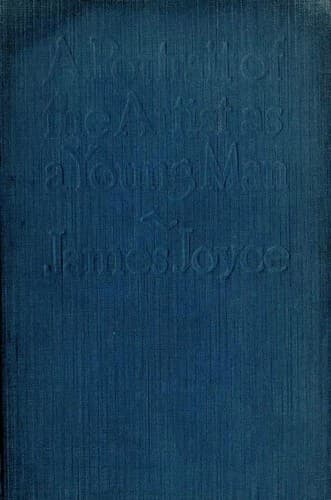
A Portrait of the Artist as a Young ManJoyce, James
General
A Portrait of the Artist as a Young Man
Joyce, James
Artists -- Fiction; Autobiographical fiction; Bildungsromans; Dublin (Ireland) -- Fiction; Young men -- Fiction
Stephen tried his best but the sum was too hard and he felt confused.
The little silk badge with the white rose on it that was pinned on the
breast of his jacket began to flutter. He was no good at sums but he
tried his best so that York might not lose. Father Arnall’s face looked
very black but he was not in a wax: he was laughing. Then Jack Lawton
cracked his fingers and Father Arnall looked at his copybook and said:
—Right. Bravo Lancaster! The red rose wins. Come on now, York! Forge
ahead!
Jack Lawton looked over from his side. The little silk badge with the
red rose on it looked very rich because he had a blue sailor top on.
Stephen felt his own face red too, thinking of all the bets about who
would get first place in elements, Jack Lawton or he. Some weeks Jack
Lawton got the card for first and some weeks he got the card for first.
His white silk badge fluttered and fluttered as he worked at the next
sum and heard Father Arnall’s voice. Then all his eagerness passed away
and he felt his face quite cool. He thought his face must be white
because it felt so cool. He could not get out the answer for the sum
but it did not matter. White roses and red roses: those were beautiful
colours to think of. And the cards for first place and second place and
third place were beautiful colours too: pink and cream and lavender.
Lavender and cream and pink roses were beautiful to think of. Perhaps a
wild rose might be like those colours and he remembered the song about
the wild rose blossoms on the little green place. But you could not
have a green rose. But perhaps somewhere in the world you could.
The bell rang and then the classes began to file out of the rooms and
along the corridors towards the refectory. He sat looking at the two
prints of butter on his plate but could not eat the damp bread. The
tablecloth was damp and limp. But he drank off the hot weak tea which
the clumsy scullion, girt with a white apron, poured into his cup. He
wondered whether the scullion’s apron was damp too or whether all white
things were cold and damp. Nasty Roche and Saurin drank cocoa that
their people sent them in tins. They said they could not drink the tea;
that it was hogwash. Their fathers were magistrates, the fellows said.
All the boys seemed to him very strange. They had all fathers and
mothers and different clothes and voices. He longed to be at home and
lay his head on his mother’s lap. But he could not: and so he longed
for the play and study and prayers to be over and to be in bed.
He drank another cup of hot tea and Fleming said:
—What’s up? Have you a pain or what’s up with you?
—I don’t know, Stephen said.
—Sick in your breadbasket, Fleming said, because your face looks white.
It will go away.
—O yes, Stephen said.
Public-domain text, read in full here on John Shaqi.
Reviews
Reviews
No reviews yet
Be the first to share your thoughts on this work.
Join the Discussion
Join the discussion
Sign in to leave a comment or review.
Sign InorCreate an account