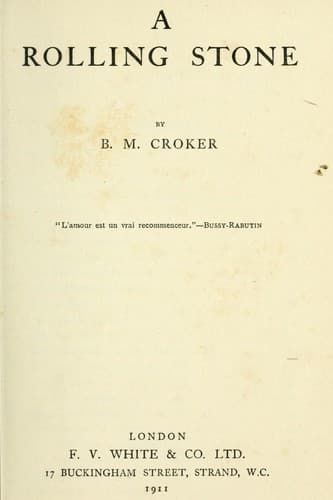
England -- Social life and customs -- 20th century -- Fiction; Household employees -- Fiction; Young men -- Fiction
The newcomer rose also, picked up his cap, and walked to the open
door. He had heard the latest news of Ottinge-in-the-Marsh, and now he
intended to have a look round the village itself.
“I believe I’ll take a bit of a stroll and smoke a pipe,” he said, as
he put on his cap and went out.
“What do you think of the new lodger, Tom?” asked his mother, as she
noisily collected plates and cups.
“I think--it’s hard to say yet; but I likes him. He’s not our sort,
though.”
“Why not? He’s had a good eddication, that’s sure, and talks up in his
head like gentry, but his hands is just the hands of a working man; and
look at his box--that’s no class!”
In the opinion of Mrs. Hogben the box settled the question, and she
went off into the scullery and closed the door with a slam of finality.
CHAPTER VIII
OTTINGE-IN-THE-MARSH
Wynyard strolled out into the little front garden along the red
brick path to the wooden gate; as he closed this, he observed that
it bore in large characters the enticing name of “Holiday Cottage.”
He smiled rather grimly as he looked back at his new residence,
a wood and plaster construction, bowed in the upper storey, with
small, insignificant windows. Then he glanced up and down the empty
thoroughfare, and was struck by the deathlike silence of the place.
What had become of the residents of Ottinge? A flock of soiled, white
ducks waddling home in single file from the marshes, and a wall-eyed
sheep-dog, were the only live objects in sight.
Ottinge was undeniably ancient and picturesque, a rare field for an
artist; the houses were detached--no two alike--and appeared to have
been built without the smallest attempt at regularity. Some stood
sideways at right angles; others had turned their backs upon the
street, and overlooked the fields; many were timbered; several were
entirely composed of black boarding; one or two were yellow; but the
majority were of rusty brick, with tiled and moss-grown roofs. Wynyard
noticed the ivy-clad house or “dogs’” hotel, with its three rows of
long, prim windows, and close by another of the same class, with a
heavy yew porch that recalled a great moustache. On its neat green
gate was affixed a brass plate and the inscription--D. BOAS, M.D.
Farther on at intervals were more houses and a few scattered shops;
these looked as if they were anxious to conceal their identity, and
only suffered a limited display of their wares. Chief among them was
one double-fronted, with tins of pressed beef and oatmeal on view, and
above the door the worthy signboard--T. HOAD, Grocer. “Quality is my
Watchword.” Next came John Death, Butcher, with a wide window, over
which an awning had been discreetly lowered.
Public-domain text, read in full here on John Shaqi.
Reviews
Reviews
No reviews yet
Be the first to share your thoughts on this work.
Join the Discussion
Join the discussion
Sign in to leave a comment or review.
Sign InorCreate an account