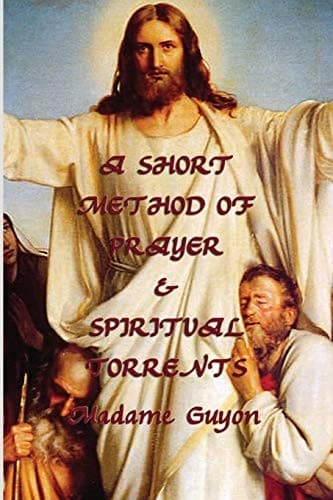
A Short Method of PrayerGuyon, Jeanne Marie Bouvier de la Motte
Religion
A Short Method of Prayer
Guyon, Jeanne Marie Bouvier de la Motte
Prayer -- Christianity
It is God Himself who conducts an examination which nothing escapes, and
we have only to turn towards God, and suffer the pain and the correction
which He gives. As this examination by God is continual, we can no
longer examine ourselves; and if we are faithful to our abandonment to
God, we shall soon be better examined by the divine light than we could
be by all our own efforts. Experience will make this known. One thing
which often causes astonishment to the soul is, that when it is
conscious of a sin, and comes to confess it to God, instead of feeling
regret and contrition, such as it formerly felt, a sweet and gentle love
takes possession of it.
Not having experienced this before, it supposes that it ought to draw
itself out of this condition to make a definite act of contrition. But
it does not see that, by doing this, it would lose true contrition,
which is this _intuitive love_, infinitely greater than anything it
could create for itself. It is a higher action, which includes the
others, with greater perfection, though these are not possessed
distinctly.
We should not seek to do anything for ourselves when God acts more
excellently in us and for us. It is hating sin as God hates it to hate
it in this way. This love, which is the operation of God in the soul, is
the purest of all love. All we have to do then is to remain as we are.
Another remarkable thing is, that we often forget our faults, and find
it difficult to remember them; but this must not trouble us, for two
reasons: The first, that this very forgetfulness is a proof that the sin
has been atoned for, and it is better to forget all that concerns
ourselves, that we may remember God alone. The second reason is, that
God does not fail, whenever confession is needful, to show to the soul
its greatest faults, for then it is He Himself who examines it.
CHAPTER XIII.
ON READING--VOCAL PRAYER--REQUESTS.
The proper manner of reading in this degree is, as soon as we feel
attracted to meditation, to cease reading, and remain at rest.
The soul is no sooner called to inward silence, than it should cease to
utter vocal prayers; saying but little at any time, and when it does say
them, if it finds any difficulty, or feels itself drawn to silence, it
should remain silent, and make no effort to pray, leaving itself to the
guidance of the Spirit of God.
The soul will find that it cannot, as formerly, present definite
requests to God. This need not surprise it, for it is now that "the
Spirit maketh intercession for the saints, according to the will of God.
The Spirit also helpeth our infirmities: for we know not what we should
pray for as we ought; but the Spirit itself maketh intercession for us,
with groanings which cannot be uttered" (Rom. viii. 26, 27).
We must second the designs of God, which are to strip the soul of its
own works, to substitute His in their place.
Public-domain text, read in full here on John Shaqi.
Reviews
Reviews
No reviews yet
Be the first to share your thoughts on this work.
Join the Discussion
Join the discussion
Sign in to leave a comment or review.
Sign InorCreate an account