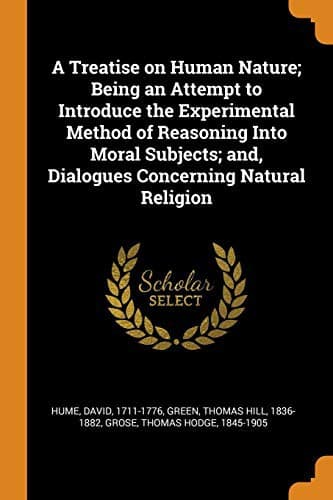
A Treatise of Human Nature: Being an Attempt to Introduce the Experimental Method Into Moral Subjects; and Dialogues Concerning Natural ReligionHume, David
PhilosophyPhilosophy
A Treatise of Human Nature: Being an Attempt to Introduce the Experimental Method Into Moral Subjects; and Dialogues Concerning Natural Religion
Hume, David
Emotions; Ethics; Knowledge, Theory of; Philosophy, English
and, when it does follow, regard it as an effect. If I thought that
the sensation of sight, however like those previously referred to
flame, did not represent the same object, I should not infer heat
as effect; and conversely, if, having identified the sensation
of sight as representative of flame, I found that the inferred
heat was not actually felt, I should judge that I was mistaken in
the identification. It follows that it is only an experience of
identical, and by consequence related and qualified, objects, of
which the memory can so determine a sequence of feelings as to
constitute it an experience of cause and effect. Thus the perception
and remembrance upon which, according to Hume, we judge one object to
be the cause of another, alike rest on the ‘fictions of identity and
continued existence.’ Without these no present experience would, in
his language, be an instance of an individual of a certain species
existing in a certain relation, nor would there be a past experience
of individuals of the same species, by comparison with which the
constancy of the relation might be ascertained.
[1] P. 388. [Book I, part III., sec. VI.]
Hume makes conceptions of identity and cause each come before the
other. Their true correlativity.
313. Against this derivation of the conception of cause and effect,
as implying that of identity, may be urged the fact that when
we would ascertain the truth of any identification we do so by
reference to causes and effects. As Hume himself puts it at the
outset of his discussion of causation, an inference of identity
‘beyond the impressions of our senses can be founded only on the
connexion of cause and effect.’ ... ‘Whenever we discover a perfect
resemblance between a new object and one which was formerly present
to the senses, we consider whether it be common in that species of
objects; whether possibly or probably any cause could operate in
producing the change and resemblance; and according as we determine
concerning these causes and effects, we form our judgment concerning
the identity of the object’. [1] This admission, it may be said,
though it tells against Hume’s own subsequent explanation of identity
as a fiction of the imagination, is equally inconsistent with any
doctrine that would treat identity as the presupposition of inference
to cause or effect. Now undoubtedly if the identity of interrupted
perceptions is one fiction of the imagination and the relation of
cause and effect another, each resulting from ‘custom,’ to say with
Hume, that we must have the idea of cause in order to arrive at the
supposition of identity, is logically to exclude any derivation
of that idea from an experience which involves the supposition of
identity. The ‘custom’ which generates the idea of cause must have
done its work before that which generates the supposition of identity
can begin. Hume therefore, after the admission just quoted, was
not entitled to treat the inference to cause or effect as a habit
Public-domain text, read in full here on John Shaqi.
Reviews
Reviews
No reviews yet
Be the first to share your thoughts on this work.
Elsewhere in the archive
Join the Discussion
Join the discussion
Sign in to leave a comment or review.
Sign InorCreate an account