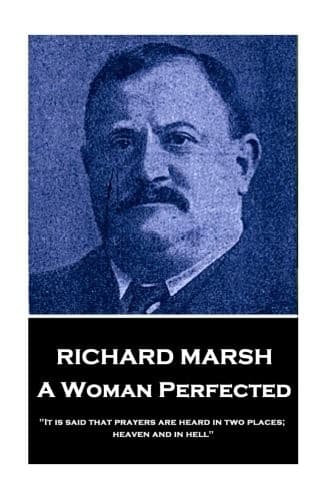
Children of the rich -- Fiction; England -- Social life and customs -- Fiction; Inheritance and succession -- Fiction
"I would much rather stand," she said. "I don't know what you have to
say to me; but I hope that, whatever it is, it won't take long; I feel
as if I can't sit; I would much sooner listen standing if you don't
mind."
But the doctor did mind; he would not have it; he made her sit. Then
nothing would satisfy her but that Elaine should sit by her; which was
agony to Miss Harding, who was in the condition which is known as
being all over pins and needles; it would have been a relief to have
been able to scream.
"Now, Nash," inquired the doctor, when the two young women, looking,
in their several ways, pictures of misery, were seated on adjacent
chairs, "where are those papers? Let's get to business; and be as
brief and as clear as you can."
Nash, with what was almost a hang-dog air, took some papers out of a
black leather bag. Untying the tape which bound them together he
began. His tale was neither very brief nor very clear; though his
meaning was plain enough when it was ended. The dead man had left
everything to his daughter; but he had nothing to leave; that was what
it came to. There was less than a hundred pounds at the bank; and
there was Cloverlea and the contents of the house. On the debit side
there were debts amounting, so far as could be ascertained, to several
thousand pounds; claims had come in from wholly unexpected quarters
for large sums. If they had to be paid at once that would involve a
forced sale of Cloverlea, and that would probably mean that very
little would be left for Nora.
The faces of the two girls, as this state of affairs was being
unfolded, were studies. On Miss Harding's face there came, by degrees,
an expression of actual agony, as if her lover was playing the part of
a torturer, whose every word was a fresh turn of the rack, or of the
thumbscrew. Nora's face, on the other hand, as she began to perceive
the point at which Mr. Nash was aiming, suggested anger rather than
pain; the same suggestion was in her voice, as she addressed a
question to him, so soon as he showed signs of having finished.
"Do you wish me to understand that my father has left no money?"
Mr. Nash looked down, as if unwilling to meet her eyes.
"Neither Dr. Banyard nor I have been able to find anything which
points to money, I am sorry to say."
"You needn't be sorry." She turned to Dr. Banyard; with, as she did
so, something in her manner which was hardly flattering to Mr. Nash.
"If my father has left no money on what have we been living? Does Mr.
Nash mean that my father spent all his money before he died? because,
if he does, I tell him, quite plainly, that I don't believe it."
The doctor got up. It was a peculiarity of his that, while he was
always anxious that others should sit still, he never could do so
himself when he was moved. Thrusting his hands into his trousers
pockets he began to fidget about the room.
Public-domain text, read in full here on John Shaqi.
Reviews
Reviews
No reviews yet
Be the first to share your thoughts on this work.
Join the Discussion
Join the discussion
Sign in to leave a comment or review.
Sign InorCreate an account