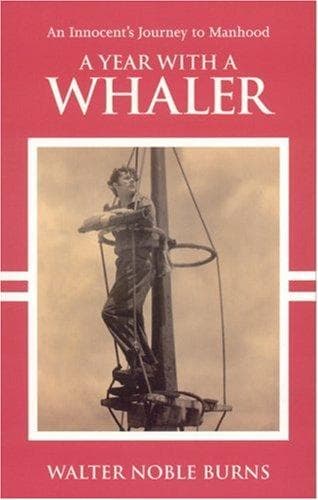
Alexander (Brig); Burns, Walter Noble, 1872-1932 -- Voyages and travels; Whalers (Persons) -- United States -- Biography; Whaling
Shooting _okchug_ (or, as it is sometimes spelled, ooksook) or hair seals
was a favorite amusement in the spring ice. The mate was an expert with a
rifle. He shot many as they lay sunning themselves on ice cakes. Okchugs
are as large as oxen and are covered with short silvery hair so glossy
that it fairly sparkles. If an okchug was killed outright, its head
dropped over upon the ice and it lay still. If only slightly wounded, the
animal flounced off into the sea. If vitally hurt, it remained motionless
with its head up and glaring defiance, whereupon a boat's crew would row
out to the ice cake and a sailor would finish the creature with a club.
It was exciting to step on a small ice cake to face a wounded and savage
okchug. The animal would come bouncing on its flippers straight at one
with a vicious barking roar. The nose was the okchug's most vulnerable
point. A tap on the nose with a club would stretch the great creature out
dead. It required a cool head, a steady nerve, and a good aim to deliver
this finishing stroke upon the small black snout. If one missed or slipped
on the ice, the possible consequences would not have been pleasant. We
tanned the skins of the okchugs and made them into trousers or "pokes."
The meat was hung over the bows to keep in an ice-box of all outdoors.
Ground up and made into sausages, it was a _pièce de resistance_ on the
forecastle bill of fare.
One night in the latter part of May we saw far off a great light flaring
smokily across the sea. It was what is known in whaler parlance as a
bug-light and was made by blazing blubber swinging in an iron basket
between the two smokestacks of a whale-ship's try-works. By it the crew
of that distant ship was working at trying out a whale. The bug-light
signaled to all the whaling fleet the first whale of the season.
The great continent of ice drifting southward gradually closed round the
fleet. The ships had worked so far in there was no escape. In the early
part of June the brig was frozen in. For three weeks the vessel remained
motionless in solid ice with every stitch of canvas furled. No water or
land was in sight--nothing but one great sweep of broken and tumbled ice
as far as the eye could see. Those three ice-bound June weeks were given
over to idleness. A stove was placed in the forecastle and was kept going
night and day. This made it possible to keep comfortable and to read.
We went on frequent seal hunts. We strolled across the frozen sea to visit
the other ships, the nearest of which was two miles away. Visiting is
called "gamming" by whalers. We learned the gossip of the fleet, who had
taken the first whale, how many whales had been caught, the adventures of
the ships, the comedies and tragedies of the whaling season.
Public-domain text, read in full here on John Shaqi.
Reviews
Reviews
No reviews yet
Be the first to share your thoughts on this work.
Join the Discussion
Join the discussion
Sign in to leave a comment or review.
Sign InorCreate an account