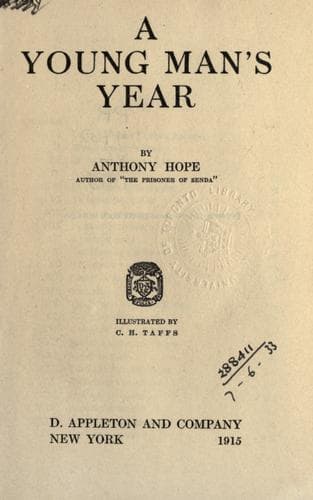
England -- Social life and customs -- Fiction; Lawyers -- Fiction; Man-woman relationships -- Fiction; Young men -- Fiction
At the back of her mind, unacknowledged, was a thought which offered a
sop to conscience. She would not be leaving Margaret to strangers.
Besides the father, there would be Judith. The little girl was very fond
of Judith, and Judith of her. They seemed to understand one another;
Margaret's tranquil demureness fitted in with Judith's dry humour and
unemotional ways. The natural thing--under certain circumstances--would
be for Judith to take over the charge of her uncle's house. "Just as if
I were to die, you know," thought Bernadette.
Besides, all this assumed that she would go away. Of course Oliver
wanted that, but--well, lots of women didn't. Nice women too, some of
them, and good mothers. She could think of two or three at least among
her own acquaintance, and recognised now, with a sort of surprise and
relief, that she had never thought very particularly the worse of them
for their peccadillo; she had never shunned their society. Who
did--although everybody knew the facts? It was odd what a difference
there was between the official view (so to speak) and the way people
actually behaved about the matter; Oliver had been quite right on that
point--and even rather amusing.
She was seeing Oliver Wyse almost daily now, and their meeting was the
event of the day to her--anticipated, waited for, feared. Everything
else stood in relation to it--as a means or a hindrance, as a dull
contrast or a merciful relief. He found her eager and excited, he left
her often weary and fretful; but by the next day she was eager again.
She was like a man who drinks himself into a headache and sadly grows
sober, only to drink once more.
The eve of the household's departure to the country had come. They were
to go on the morrow; as matters were arranged, Oliver Wyse would join
them two days later. After another ten days, Arthur was due at Hilsey
for his visit, and two or three friends besides for a week-end. So stood
the programme--externally. But one point in it still hung in doubt, even
externally. Sir Oliver had a competing engagement--some important
business on the Continent; should he give up the business and come to
Hilsey? Or the other way? He put the question to her, when he came to
take leave of her--whether for three days, or for how much longer?
Public-domain text, read in full here on John Shaqi.
Reviews
Reviews
No reviews yet
Be the first to share your thoughts on this work.
Elsewhere in the archive
Join the Discussion
Join the discussion
Sign in to leave a comment or review.
Sign InorCreate an account