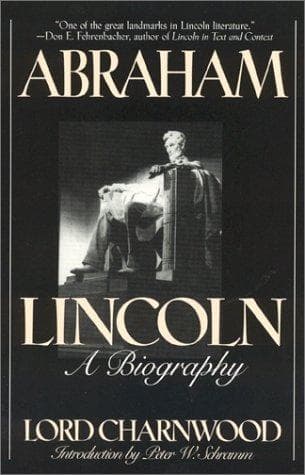
Abraham LincolnCharnwood, Godfrey Rathbone Benson, Baron
History
Abraham Lincoln
Charnwood, Godfrey Rathbone Benson, Baron
Lincoln, Abraham, 1809-1865; Presidents -- United States -- Biography
Up to a certain point the sense of patriotic pride in the Union had grown
also in the South. It was fostered at first by the predominant part
which the South played in the political life of the country. But for a
generation past the sense of a separate interest of the South had been
growing still more vigorously. The political predominance of the South
had continued, but under a standing menace of downfall as the North grew
more populous and the patriotism which it at first encouraged had become
perverted into an arrogantly unconscious feeling that the Union was an
excellent thing on condition that it was subservient to the South. The
common interest of the Southern States was slavery; and, when the
Northerners had become a majority which might one day dominate the
Federal Government, this common interest of the slave States found a
weapon at hand in the doctrine of the inherent sovereignty of each
individual State. This doctrine of State sovereignty had come to be held
as universally in the South as the strict Unionist doctrine in the North,
and held with as quiet and unshakable a confidence that it could not be
questioned. It does not seem at all strange that the State, as against
the Union, should have remained the supreme object of loyalty in old
communities like those of South Carolina and Virginia, abounding as they
did in conservative influences which were lacking in the North. But this
provincial loyalty was not in the same sense a natural growth in States
like Alabama or Mississippi. These, no less than Indiana and Illinois,
were the creatures of the Federal Congress, set up within the memory of
living men, with arbitrary boundaries that cut across any old lines of
division. There was, in fact, no spontaneous feeling of allegiance
attaching to these political units, and the doctrine of their sovereignty
had no use except as a screen for the interest in slavery which the
Southern States had in common. But Calhoun, in a manner characteristic
of his peculiar and dangerous type of intellect, had early seen in a view
of State sovereignty, which would otherwise have been obsolete, the most
serviceable weapon for the joint interests of the Southern States. In a
society where intellectual life was restricted, his ascendency had been
great, though his disciples had, reasonably enough, thrown aside the
qualifications which his subtle mind had attached to the right of
secession. Thus in the Southern States generally, even among men most
strongly opposed to the actual proposal to secede, the real or alleged
constitutional right of a State to secede if it chose now passed
unquestioned and was even regarded as a precious liberty.
Public-domain text, read in full here on John Shaqi.
Reviews
Reviews
No reviews yet
Be the first to share your thoughts on this work.
Elsewhere in the archive
Join the Discussion
Join the discussion
Sign in to leave a comment or review.
Sign InorCreate an account