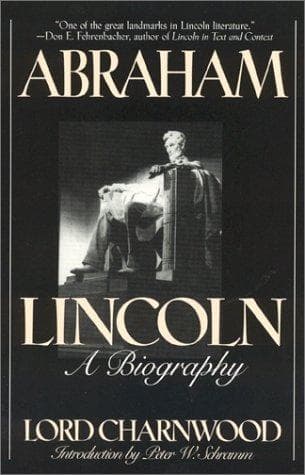
Abraham LincolnCharnwood, Godfrey Rathbone Benson, Baron
History
Abraham Lincoln
Charnwood, Godfrey Rathbone Benson, Baron
Lincoln, Abraham, 1809-1865; Presidents -- United States -- Biography
the wrongfulness of slavery had been made. It would have been hard to
forecast how the end would come, or how soon; but the end was certain if
the Southern States had elected to remain the countrymen of a people who
were coming to regard their fundamental institution with growing
reprobation. Lincoln had said, "This government cannot endure
permanently, half slave and half free." Lincoln was right, and so from
their own point of view, that of men not brave or wise enough to take in
hand a difficult social reform, were the leaders who declared immediately
for secession.
In no other contest of history are those elements in human affairs on
which tragic dramatists are prone to dwell so clearly marked as in the
American Civil War. No unsophisticated person now, except in ignorance
as to the cause of the war, can hesitate as to which side enlists his
sympathy, or can regard the victory of the North otherwise than as the
costly and imperfect triumph of the right. But the wrong
side--emphatically wrong--is not lacking in dignity or human worth; the
long-drawn agony of the struggle is not purely horrible to contemplate;
there is nothing that in this case makes us reluctant to acknowledge the
merits of the men who took arms in the evil cause. The experience as to
the relations between superior and inferior races, which is now at the
command of every intelligent Englishman, forbids us to think that the
inferiority of the negro justified slavery, but it also forbids us to
fancy that men to whom the relation of owner to slave had become natural
must themselves have been altogether degraded. The men upon the Southern
side who can claim any special admiration were simple soldiers who had no
share in causing the war; among the political leaders whom they served,
there was none who stands out now as a very interesting personality, and
their chosen chief is an unattractive figure; but we are not to think of
these authors of the war as a gang of hardened, unscrupulous, corrupted
men. As a class they were reputable, public-spirited, and religious men;
they served their cause with devotion and were not wholly to blame that
they chose it so ill. The responsibility for the actual secession does
not rest in an especial degree on any individual leader. Secession began
rather with the spontaneous movement of the whole community of South
Carolina, and in the States which followed leading politicians expressed
rather than inspired the general will. The guilt which any of us can
venture to attribute for this action of a whole deluded society must rest
on men like Calhoun, who in a previous generation, while opinion in the
South was still to some extent unformed, stifled all thought of reform
and gave the semblance of moral and intellectual justification to a
system only susceptible of a historical excuse.
Public-domain text, read in full here on John Shaqi.
Reviews
Reviews
No reviews yet
Be the first to share your thoughts on this work.
Elsewhere in the archive
Join the Discussion
Join the discussion
Sign in to leave a comment or review.
Sign InorCreate an account