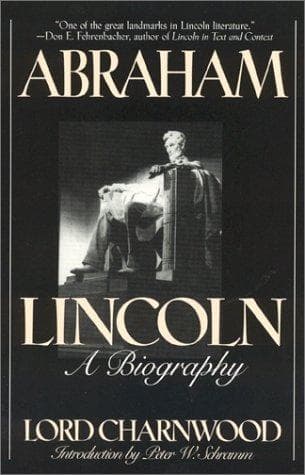
Abraham LincolnCharnwood, Godfrey Rathbone Benson, Baron
History
Abraham Lincoln
Charnwood, Godfrey Rathbone Benson, Baron
Lincoln, Abraham, 1809-1865; Presidents -- United States -- Biography
If we could determine the prevailing sentiment in the North at some
particular moment during the crisis, it would probably represent what
very few individual men continued to think for six months together.
Early in the crisis some strong opponents of slavery were for letting the
South go, declaring, as did Horace Greeley of the _New York Tribune_,
that "they would not be citizens of a Republic of which one part was
pinned to the other part with bayonets"; but this sentiment seems soon to
have given way when the same men began to consider, as Lincoln had
considered, whether an agreement to sever the Union between the States,
with the difficult adjustment of mutual interests which it would have
involved, could be so effected as to secure a lasting peace. A blind
rage on behalf of conciliation broke out later in prosperous business men
in great towns--even in Boston it is related that "Beacon Street
aristocrats" broke up a meeting to commemorate John Brown on the
anniversary of his death, and grave persons thought the meeting an
outrage. Waves of eager desire for compromise passed over the Northern
community. Observers at the time and historians after are easily
mistaken as to popular feeling; the acute fluctuations of opinion
inevitable among journalists, and in any sort of circle where men are
constantly meeting and talking politics, may leave the great mass of
quiet folk almost unaffected. We may be sure that there was a
considerable body of steady opinion very much in accord with Lincoln;
this should not be forgotten, but it must not be supposed that it
prevailed constantly. On the contrary, it was inherent in the nature of
the crisis that opinion wavered and swayed. We should miss the whole
significance of Lincoln's story if we did not think of the North now and
to the end of the war as exposed to disunion, hesitation, and quick
reaction. If at this time a sufficiently authoritative leader with
sufficiently determined timidity had inaugurated a policy of stampede, he
might have had a vast and tumultuous following. Only his following would
quickly, if too late, have repented. What was wanted, if the people of
the North were to have what most justly might be called their way, was a
leader who would not seem to hurry them along, nor yet be ever looking
round to see if they followed, but just go groping forward among the
innumerable obstacles, guided by such principles of good sense and of
right as would perhaps on the whole and in the long run be approved by
the maturer thought of most men; and Lincoln was such a leader.
Public-domain text, read in full here on John Shaqi.
Reviews
Reviews
No reviews yet
Be the first to share your thoughts on this work.
Elsewhere in the archive
Join the Discussion
Join the discussion
Sign in to leave a comment or review.
Sign InorCreate an account