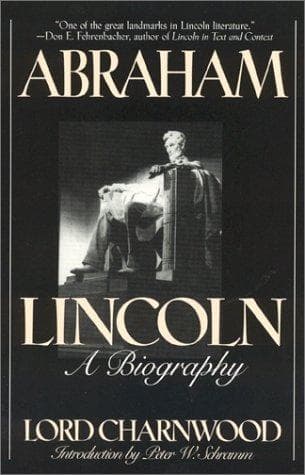
Abraham LincolnCharnwood, Godfrey Rathbone Benson, Baron
History
Abraham Lincoln
Charnwood, Godfrey Rathbone Benson, Baron
Lincoln, Abraham, 1809-1865; Presidents -- United States -- Biography
Thus, in the autumn of 1861, North and South had become solidified into
something like two countries. In the month of July, which now concerns
us, this process was well on its way, but it is to be marked that the
whole long tract of Kentucky still formed a neutral zone, which the
Northern Government did not wish to harass, and which perhaps the South
would have done well to let alone, while further west in Missouri the
forces of the North were not even as fully organised as in the East.
So the only possible direction in which any great blow could be struck
was the direction of Richmond, now the capital, and it might seem,
therefore, the heart, of the Confederacy. The Confederate Congress was
to meet there on July 20. The _New York Tribune_, which was edited by
Mr. Horace Greeley, a vigorous writer whose omniscience was unabated by
the variation of his own opinion, was the one journal of far-reaching
influence in the North; and it only gave exaggerated point to a general
feeling when it declared that the Confederate Congress must not meet.
The Senators and Congressmen now in Washington were not quite so
exacting, but they had come there unanimous in their readiness to vote
taxes and support the war in every way, and they wanted to see
something done; and they wanted it all the more because the three
months' service of the militia was running out. General Scott, still
the chief military adviser of Government, was quite distinct in his
preference for waiting and for perfecting the discipline and
organisation of the volunteers, who had not yet even been formed into
brigades. On the militia he set no value at all. For long he refused
to countenance any but minor movements preparatory to a later advance.
It is not quite certain, however, that Congress and public opinion were
wrong in clamouring for action. The Southern troops were not much, if
at all, more ready for use than the Northerners; and Jefferson Davis
and his military adviser, Lee, desired time for their defensive
preparations. It was perhaps too much to expect that the country after
its great uprising should be content to give supplies and men without
end while nothing apparently happened; and the spirit of the troops
themselves might suffer more from inaction than from defeat. A further
thought, while it made defeat seem more dangerous, made battle more
tempting. There was fear that European Powers might recognise the
Southern Confederacy and enter into relations with it. Whether they
did so depended on whether they were confirmed in their growing
suspicion that the North could not conquer the South. Balancing the
military advice which was given them as to the risk against this
political importunity, Lincoln and his Cabinet chose the risk, and
Scott at length withdrew his opposition. Lincoln was possibly more
sensitive to pressure than he afterwards became, more prone to treat
himself as a person under the orders of the people, but there is no
Public-domain text, read in full here on John Shaqi.
Reviews
Reviews
No reviews yet
Be the first to share your thoughts on this work.
Elsewhere in the archive
Join the Discussion
Join the discussion
Sign in to leave a comment or review.
Sign InorCreate an account