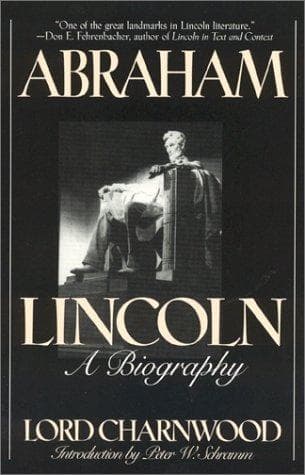
Abraham LincolnCharnwood, Godfrey Rathbone Benson, Baron
History
Abraham Lincoln
Charnwood, Godfrey Rathbone Benson, Baron
Lincoln, Abraham, 1809-1865; Presidents -- United States -- Biography
Lincoln had failed to move McClellan early in December. For part of
that month and January McClellan was very ill. Consultations were held
with other generals, including McDowell, who could not be given the
chief command because the troops did not trust him. McDowell and the
rest were in agreement with Lincoln. Then McClellan suddenly recovered
and was present at a renewed consultation. He snubbed McDowell; the
inadequacy of his force to meet, in fact, less than a third of its
number was "so plain that a blind man could see it"; he was severely
and abruptly tackled as to his own plans by Secretary Chase; Lincoln
intervened to shield him, got from him a distinct statement that he had
in his mind a definite time for moving, and adjourned the meeting.
Stanton, one of the friends to whom McClellan had confided his
grievances, was now at the War Department and was at one with the Joint
Committee of Congress in his impatience that McClellan should move. At
last, on January 27, Lincoln published a "General War Order" that a
forward movement was to be made by the army of the Potomac and the
Western armies on February 22. It seems a blundering step, but it
roused McClellan. For a time he even thought of acting as Lincoln
wished; he would move straight against Johnston, and "in ten days," he
told Chase on February 13, "I shall be in Richmond." But he quickly
returned to the plan which he seems to have been forming before but
which he only now revealed to the Government, and it was a plan which
involved further delay. When February 22 passed and nothing was done,
the Joint Committee were indignant that Lincoln still stood by
McClellan. But McClellan now was proposing definite action; apart from
the difficulty of finding a better man, there was the fact that
McClellan had made his army and was beloved by it; above all, Lincoln
had not lost all the belief he had formed at first in McClellan's
capacity; he believed that "if he could once get McClellan started" he
would do well. Professional criticism, alive to McClellan's military
faults, has justified Lincoln in this, and it was for something other
than professional failure that Lincoln at last removed him.
Public-domain text, read in full here on John Shaqi.
Reviews
Reviews
No reviews yet
Be the first to share your thoughts on this work.
Elsewhere in the archive
Join the Discussion
Join the discussion
Sign in to leave a comment or review.
Sign InorCreate an account