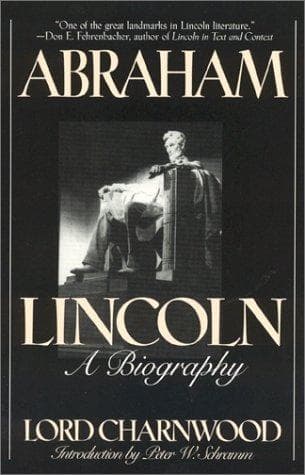
Abraham LincolnCharnwood, Godfrey Rathbone Benson, Baron
History
Abraham Lincoln
Charnwood, Godfrey Rathbone Benson, Baron
Lincoln, Abraham, 1809-1865; Presidents -- United States -- Biography
indignation against the slave owners, in whose guilt the whole country,
North and South, seemed to him an accomplice. He would have classed
that very natural indignation under the head of "malice"--"I shall do
nothing in malice," he wrote to a citizen of Louisiana; "what I deal
with is too vast for malicious dealing." But it was not, as we shall
see before long, too vast for an interest, as sympathetic as it was
matter of fact, in the welfare of the negroes. They were actual human
beings to him, and he knew that the mere abrogation of the law of
slavery was not the only thing necessary to their advancement. Looking
back, with knowledge of what happened later, we cannot fail to be glad
that they were emancipated somehow, but we are forced to regret that
they could not have been emancipated by some more considerate process.
Lincoln, perhaps alone among the Americans who were in earnest in this
matter, looked at it very much in the light in which all men look at it
to-day.
In the early part of 1862 the United States Government concluded a
treaty with Great Britain for the more effectual suppression of the
African slave trade, and it happened about the same time that the first
white man ever executed as a pirate under the American law against the
slave trade was hanged in New York. In those months Lincoln was
privately trying to bring about the passing by the Legislature of
Delaware of an Act for emancipating, with fit provisions for their
welfare, the few slaves in that State, conditionally upon compensation
to be paid to the owners by the United States. He hoped that if this
example were set by Delaware, it would be followed in Maryland, and
would spread later. The Delaware House were favourable to the scheme,
but the Senate of the State rejected it. Lincoln now made a more
public appeal in favour of his policy. In March, 1862, he sent a
Message to Congress, which has already been quoted, and in which he
urged the two Houses to pass Resolutions pledging the United States to
give pecuniary help to any State which adopted gradual emancipation.
It must be obvious that if the slave States of the North could have
been led to adopt this policy it would have been a fitting preliminary
to any action which might be taken against slavery in the South; and
the policy might have been extended to those Southern States which were
first recovered for the Union. The point, however, upon which Lincoln
dwelt in his Message was that, if slavery were once given up by the
border States, the South would abandon all hope that they would ever
join the Confederacy. In private letters to an editor of a newspaper
and others he pressed the consideration that the cost of compensated
abolition was small in proportion to what might be gained by a quicker
ending of the war. During the discussion of his proposal in Congress
and again after the end of the Session he invited the Senators and
Representatives of the border States to private conference with him in
Public-domain text, read in full here on John Shaqi.
Reviews
Reviews
No reviews yet
Be the first to share your thoughts on this work.
Elsewhere in the archive
Join the Discussion
Join the discussion
Sign in to leave a comment or review.
Sign InorCreate an account