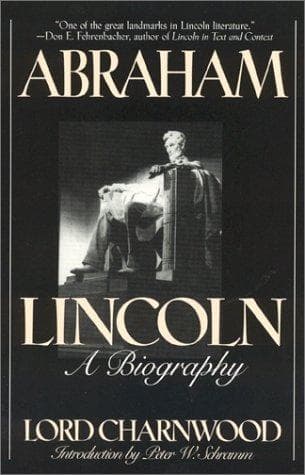
Abraham LincolnCharnwood, Godfrey Rathbone Benson, Baron
History
Abraham Lincoln
Charnwood, Godfrey Rathbone Benson, Baron
Lincoln, Abraham, 1809-1865; Presidents -- United States -- Biography
Maryland he would consider it as an indication that it was his duty to
move forward. "It might be thought strange," he said, "that he had in
this way submitted the disposal of matters, when the way was not clear
to his mind what he should do. God had decided this question in favour
of the slaves."
Such is the story of what we may now remember as one of the signal
events in the chequered progress of Christianity. We have to follow
its consequences a little further. These were not at first all that
its author would have hoped. "Commendation in newspapers and by
distinguished individuals is," he said in a private letter, "all that a
vain man could wish," but recruits for the Army did not seem to come in
faster. In October and November there were elections for Congress, and
in a number of States the Democrats gained considerably, though it was
noteworthy that the Republicans held their ground not only in New
England and in the furthest Western States, but also in the border
slave States. The Democrats, who from this time on became very
formidable to Lincoln, had other matters of complaint, as will be seen
later, but they chiefly denounced the President for trying to turn the
war into one against slavery. "The Constitution as it is and the Union
as it was" had been their election cry. The good hearing that they
got, now as at a later time, was due to the fact that people were
depressed about the war; and it is plain enough that Lincoln had been
well advised in delaying his action till after a military success. As
it was, there was much that seemed to show that public confidence in
him was not strong, but public confidence in any man is hard to
estimate, and the forces that in the end move opinion most are not
quickly apparent. There are little indications that his power and
character were slowly establishing their hold; it seems, for instance,
to have been about this time that "old Abe" or "Uncle Abe" began to be
widely known among common people by the significant name of "Father
Abraham," and his secretaries say that he was becoming conscious that
his official utterances had a deeper effect on public opinion than any
immediate response to them in Congress showed.
Public-domain text, read in full here on John Shaqi.
Reviews
Reviews
No reviews yet
Be the first to share your thoughts on this work.
Elsewhere in the archive
Join the Discussion
Join the discussion
Sign in to leave a comment or review.
Sign InorCreate an account