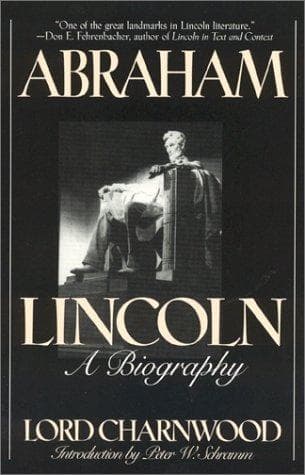
Abraham LincolnCharnwood, Godfrey Rathbone Benson, Baron
History
Abraham Lincoln
Charnwood, Godfrey Rathbone Benson, Baron
Lincoln, Abraham, 1809-1865; Presidents -- United States -- Biography
In the North, where there was double the population to draw upon, the
need for compulsion was not likely to be felt as soon. The various
influences which would later depress enlistment had hardly begun to
assert themselves, when the Government, as if to aggravate them in
advance, committed a blunder which has never been surpassed in its own
line. On April 3, 1862, recruiting was stopped dead; the central
recruiting office at Washington was closed and its staff dispersed. Many
writers agree in charging this error against Stanton. He must have been
the prime author of it, but this does not exonerate Lincoln. It was no
departmental matter, but a matter of supreme policy. Lincoln's knowledge
of human nature and his appreciation of the larger bearings of every
question might have been expected to set Stanton right, unless, indeed,
the thing was done suddenly behind his back. In any case, this must be
added to the indications seen in an earlier chapter, that Lincoln's calm
strength and sure judgment had at that time not yet reached their full
development. As for Stanton, a man of much narrower mind, but acute,
devoted, and morally fearless, kept in the War Department as a sort of
tame tiger to prey on abuses, negligences, pretensions, and political
influences, this was one among a hundred smaller erratic doings, which
his critics have never thought of as outweighing his peculiar usefulness.
His departmental point of view can easily be understood. Recruits,
embarrassingly, presented themselves much faster than they could be
organised or equipped, and an overdriven office did not pause to think
out some scheme of enlistment for deferred service. Waste had been
terrific, and Stanton did not dislike a petty economy which might shock
people in Washington. McClellan clamoured for more men--let him do
something with what he had got; Stanton, indeed, very readily became
sanguine that McClellan, once in motion, would crush the Confederacy.
Events conspired to make the mistake disastrous. In these very days the
Confederacy was about to pass its own Conscription Act. McClellan,
instead of pressing on to Richmond, sat down before Yorktown and let the
Confederate conscripts come up. Halleck was crawling southward, when a
rapid advance might have robbed the South of a large recruiting area.
The reopening of enlistment came on the top of the huge disappointment at
McClellan's failure in the peninsula. There was a creditable response to
the call which was then made for volunteers. But the disappointment of
the war continued throughout 1862; the second Bull Run; the inconclusive
sequel to Antietam; Fredericksburg; and, side by side with these events,
the long-drawn failure of Buell's and Rosecrans' operations. The spirit
of voluntary service seems to have revived vigorously enough wherever and
whenever the danger of Southern invasion became pressing, but under this
protracted depressing influence it no longer rose to the task of subduing
the South.
Public-domain text, read in full here on John Shaqi.
Reviews
Reviews
No reviews yet
Be the first to share your thoughts on this work.
Elsewhere in the archive
Join the Discussion
Join the discussion
Sign in to leave a comment or review.
Sign InorCreate an account