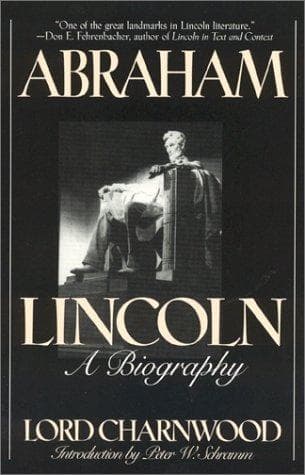
Abraham LincolnCharnwood, Godfrey Rathbone Benson, Baron
History
Abraham Lincoln
Charnwood, Godfrey Rathbone Benson, Baron
Lincoln, Abraham, 1809-1865; Presidents -- United States -- Biography
It is needless to discuss just how dark or how fair American slavery in
its working should be painted. The moderate conclusions which are quite
sufficient for our purpose are uncontested. First, this much must
certainly be conceded to those who would defend the slave system, that in
the case of the average slave it was very doubtful whether his happiness
(apart from that of future generations) could be increased by suddenly
turning him into a free man working for a wage; justice would certainly
have demanded that the change should be accompanied by other provisions
for his benefit. But, secondly, on the refractory negro, more vicious,
or sometimes, one may suspect, more manly than his fellows, the system
was likely to act barbarously. Thirdly, every slave family was exposed
to the risk, on such occasions as the death or great impoverishment of
its owner, of being ruthlessly torn asunder, and the fact that negroes
often rebounded or seemed to rebound from sorrows of this sort with
surprising levity does not much lessen the horror of it. Fourthly, it is
inherent in slavery that its burden should be most felt precisely by the
best minds and strongest characters among the slaves. And, though the
capacity of the negroes for advancement could not then and cannot yet be
truly measured, yet it existed, and the policy of the South shut the door
upon it. Lastly, the system abounded in brutalising influences upon a
large number of white people who were accessory to it, and notoriously it
degraded the poor or "mean whites," for whom it left no industrial
opening, and among whom it caused work to be despised.
There is thus no escape from Lincoln's judgment: "If slavery is not
wrong, nothing is wrong." It does not follow that the way to right the
wrong was simple, or that instant and unmitigated emancipation was the
best way. But it does follow that, failing this, it was for the
statesmen of the South to devise a policy by which the most flagrant
evils should be stopped, and, however cautiously and experimentally, the
raising of the status of the slave should be proceeded with. It does not
follow that the people who, on one pretext or another, shut their eyes to
the evil of the system, while they tried to keep their personal dealing
humane, can be sweepingly condemned by any man. But it does follow that
a deliberate and sustained policy which, neglecting all reform, strove at
all costs to perpetuate the system and extend it to wider regions, was as
criminal a policy as ever lay at the door of any statesmen. And this, in
fact, became the policy of the South.
Public-domain text, read in full here on John Shaqi.
Reviews
Reviews
No reviews yet
Be the first to share your thoughts on this work.
Join the Discussion
Join the discussion
Sign in to leave a comment or review.
Sign InorCreate an account