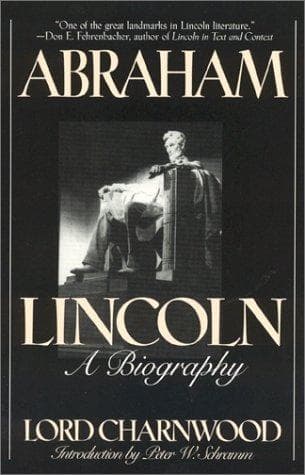
Abraham LincolnCharnwood, Godfrey Rathbone Benson, Baron
History
Abraham Lincoln
Charnwood, Godfrey Rathbone Benson, Baron
Lincoln, Abraham, 1809-1865; Presidents -- United States -- Biography
wrongful, it was bought off and not met with a straightforward refusal.
Taylor died in the course of 1850 and Vice-President Millard Fillmore,
of New York, succeeded him. Fillmore had an appearance of grave and
benign wisdom which led a Frenchman to describe him as the ideal ruler
of a Republic, but he was a pattern of that outwardly dignified, yet
nerveless and heartless respectability, which was more dangerous to
America at that period than political recklessness or want of scruple.
The actual issue of the crisis was that the admission of California was
bought from the South by large concessions in other directions. This
was the proposal of Henry Clay, who was now an old man anxious for the
Union, but had been a lover of such compromises ever since he promoted
the Missouri Compromise thirty years ago; but, to the savage
indignation of some of his Boston admirers, Webster used the whole
force of his influence and debating power in support of Clay. The
chief concessions made to the South were two. In the first place
Territorial Governments were set up in New Mexico and Utah (since then
the home of the Mormons) without any restriction on slavery. This
concession was defended in the North on the ground that it was a sham,
because the physical character of those regions made successful slave
plantations impossible there. But it was, of course, a surrender of
the principle which had been struggled for in the Wilmot Proviso during
the last four years; and the Southern leaders showed the clearness of
their limited vision by valuing it just upon that ground. There had
been reason for the territorial concessions to slavery in the past
generation because it was established in the territories concerned; but
there was no such reason now. The second concession was that of a new
Federal law to ensure the return of fugitive slaves from the free
States. The demand for this was partly factitious, for the States in
the far South, which were not exposed to loss of slaves, were the most
insistent on it, and it would appear that the Southern leaders felt it
politic to force the acceptance of the measure in a form which would
humiliate their opponents. There is no escape from the contention,
which Lincoln especially admitted without reserve, that the enactment
of an effective Act of this sort was, if demanded, due under the
provisions of the Constitution; but the measure actually passed was
manifestly defiant of all principles of justice. It was so framed as
almost to destroy the chance which a lawfully free negro might have of
proving his freedom, if arrested by the professional slave-hunters as a
runaway. It was the sort of Act which a President should have vetoed
as a fraud upon the Constitution. Thus over and above the objection,
now plain, to any compromise, the actual compromise proposed was marked
by flagrant wrong. But it was put through by the weight of Webster and
Clay.
Public-domain text, read in full here on John Shaqi.
Reviews
Reviews
No reviews yet
Be the first to share your thoughts on this work.
Elsewhere in the archive
Join the Discussion
Join the discussion
Sign in to leave a comment or review.
Sign InorCreate an account