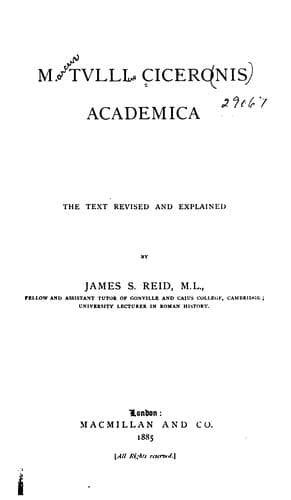
Knowledge, Theory of -- Early works to 1800; Philosophy -- Early works to 1800
XLVIII. 147. Verum, quoniam non solum nauta significat, sed etiam Favonius
ipse insusurrat navigandi nobis, Luculle, tempus esse et quoniam satis
multa dixi, est mihi perorandum. Posthac tamen, cum haec quaeremus, potius
de dissensionibus tantis summorum virorum disseramus, de obscuritate
naturae deque errore tot philosophorum, qui de bonis contrariisque rebus
tanto opere discrepant, ut, cum plus uno verum esse non possit, iacere
necesse sit tot tam nobilis disciplinas, quam de oculorum sensuumque
reliquorum mendaciis et de sorite aut pseudomeno, quas plagas ipsi contra
se Stoici texuerunt. 148. Tum Lucullus: Non moleste, inquit, fero nos haec
contulisse. Saepius enim congredientes nos, et maxime in Tusculanis
nostris, si quae videbuntur, requiremus. Optime, inquam, sed quid Catulus
sentit? quid Hortensius? Tum Catulus: Egone? inquit, ad patris revolvor
sententiam, quam quidem ille Carneadeam esse dicebat, ut percipi nihil
putem posse, adsensurum autem non percepto, id est, opinaturum sapientem
existimem, sed ita, ut intellegat se opinari sciatque nihil esse quod
comprehendi et percipi possit: qua re εποχην illam omnium rerum non
probans, illi alteri sententiae, nihil esse quod percipi possit, vehementer
adsentior. Habeo, inquam, sententiam tuam nec eam admodum aspernor. Sed
tibi quid tandem videtur, Hortensi? Tum ille ridens: Tollendum. Teneo te,
inquam: nam ista Academiae est propria sententia. Ita sermone confecto
Catulus remansit: nos ad naviculas nostras descendimus.
* * * * *
NOTES.
BOOK I.
§§1--14. Summary. Cic., Varro and Atticus meet at Cumae (1). Cic.,
after adroitly reminding Varro that the promised dedication of the _De
Lingua Latina_ is too long delayed, turns the conversation towards
philosophy, by asking Varro why he leaves this subject untouched (2,
3). Varro thinks philosophy written in Latin can serve no useful
purpose, and points to the failures of the Roman Epicureans (4--6). He
greatly believes in philosophy, but prefers to send his friends to
Greece for it, while he devotes himself to subjects which the Greeks
have not treated (7, 8). Cic. lauds this devotion, but demurs to the
theory that philosophy written in Latin is useless. Latins may surely
imitate Greek philosophers as well as Greek poets and orators. He gives
reasons why he should himself make the attempt, and instancing the
success of Brutus, again begs Varro to write on philosophy (9--12).
Varro putting the request on one side charges Cic. with deserting the
Old Academy for the New. Cic. defends himself, and appeals to Philo for
the statement that the New Academy is in harmony with the Old. Varro
refers to Antiochus as an authority on the other side. This leads to a
proposal on the part of Cic. to discuss thoroughly the difference
between Antiochus and Philo. Varro agrees, and promises an exposition
of the principles of Antiochus (13, 14).
Public-domain text, read in full here on John Shaqi.
Reviews
Reviews
No reviews yet
Be the first to share your thoughts on this work.
Elsewhere in the archive
Join the Discussion
Join the discussion
Sign in to leave a comment or review.
Sign InorCreate an account